
Last updated November 16, 2026
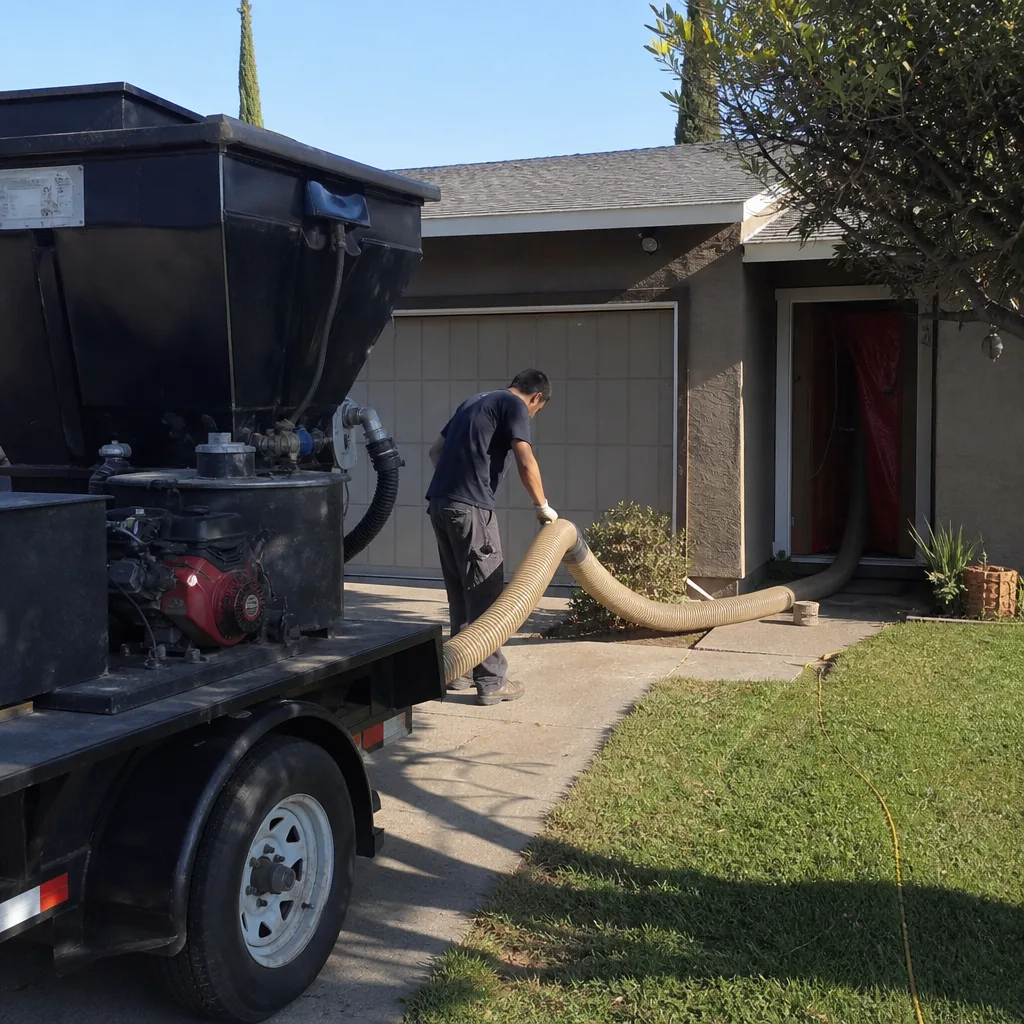
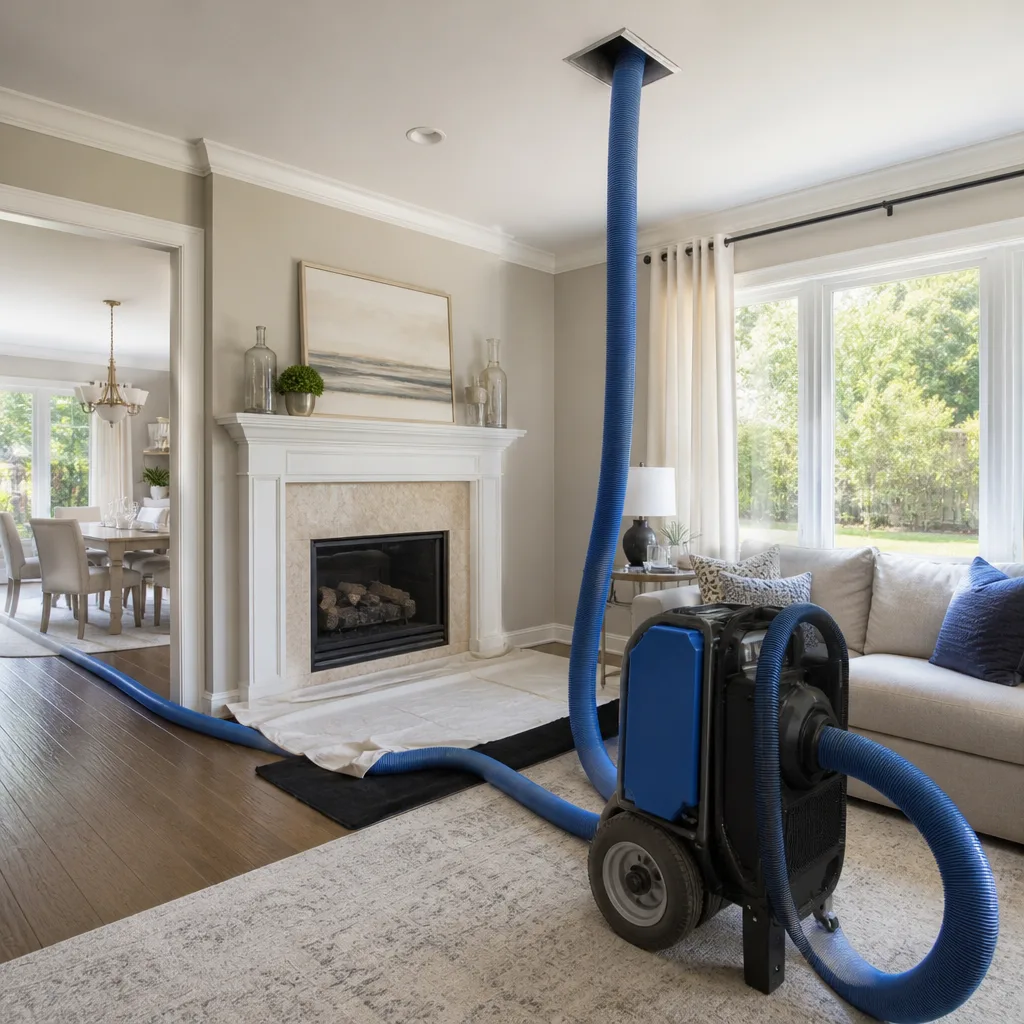 Whole-home duct cleaning
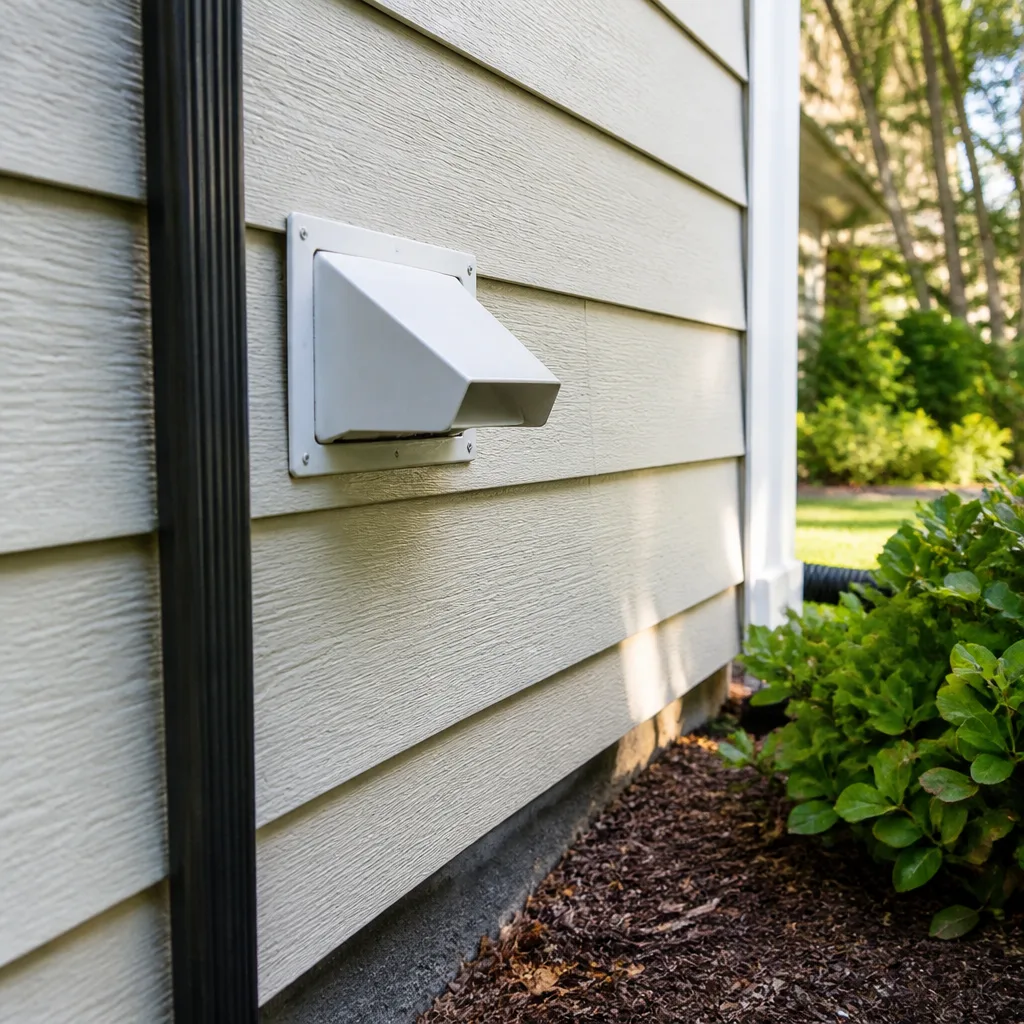 Dryer vent cleaning
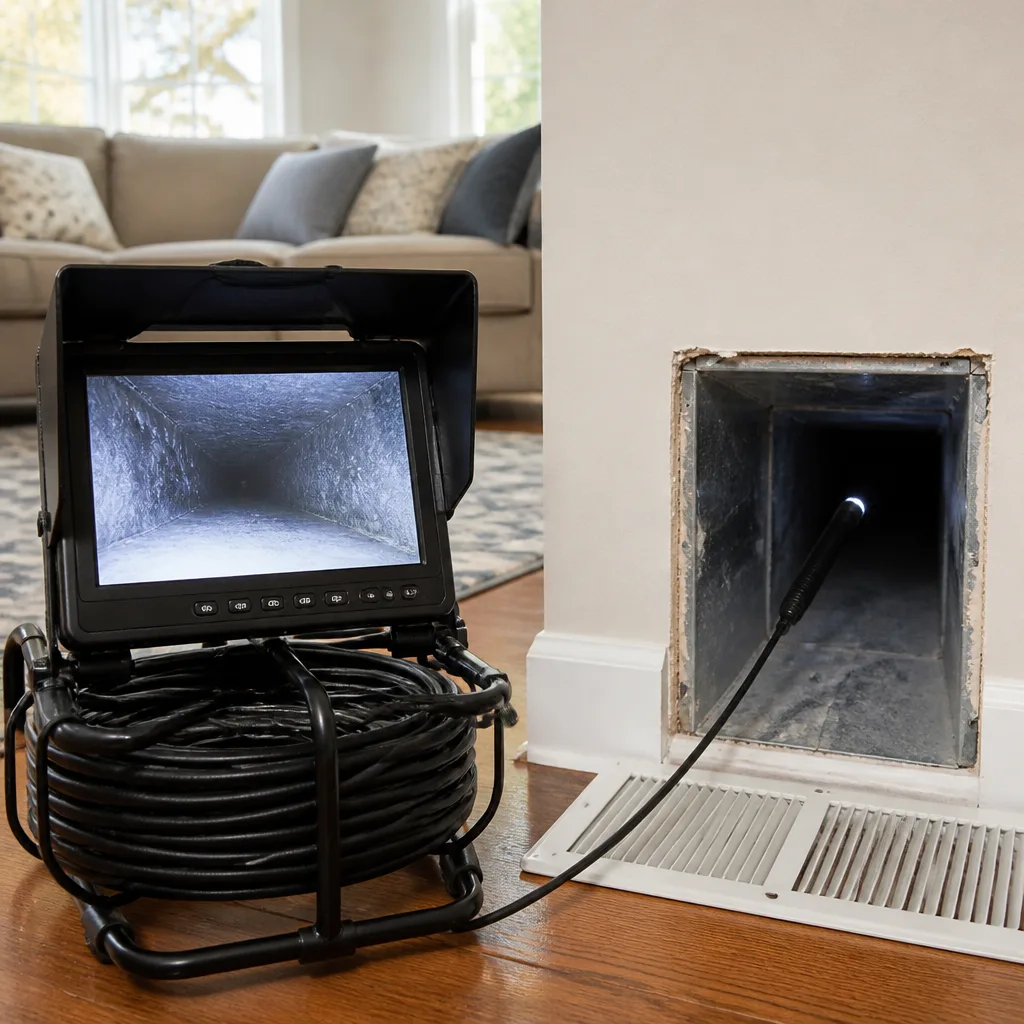 Camera inspection
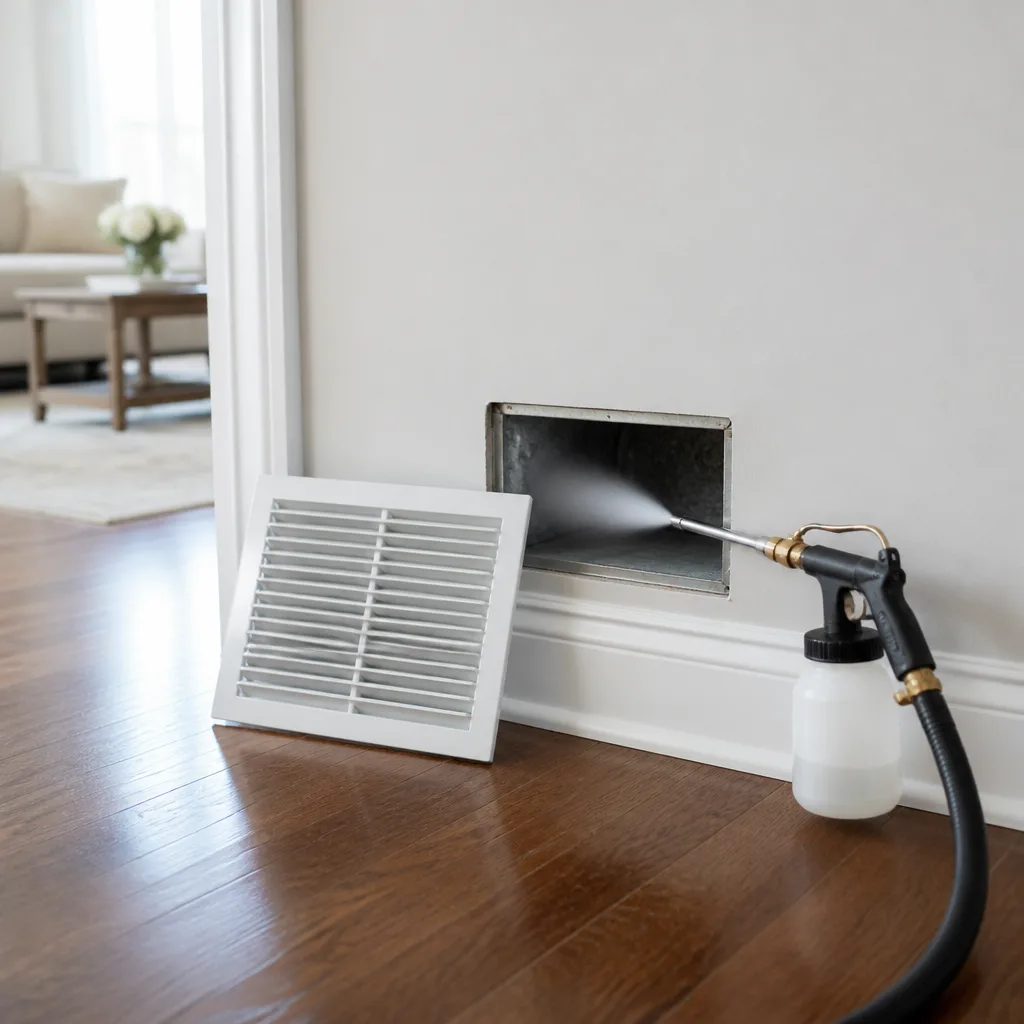 Sanitizing & deodorizing
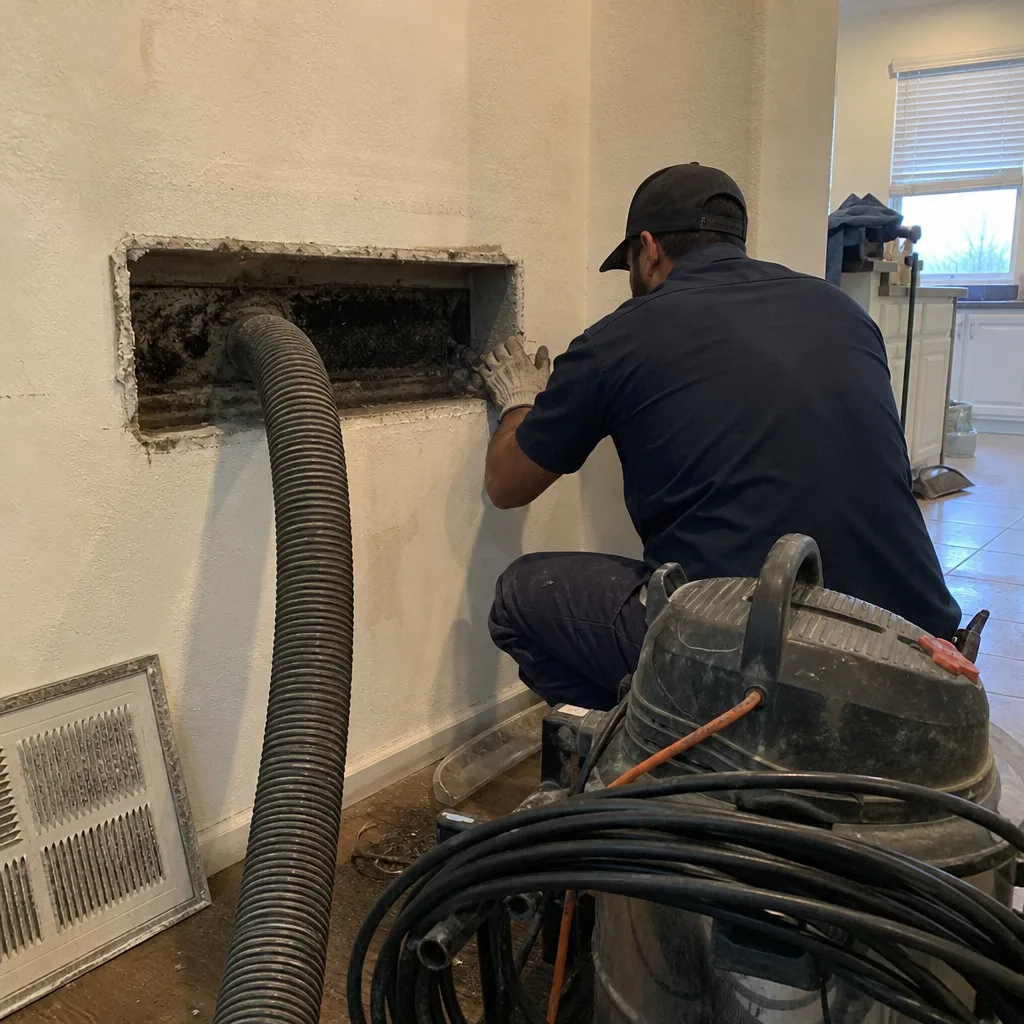
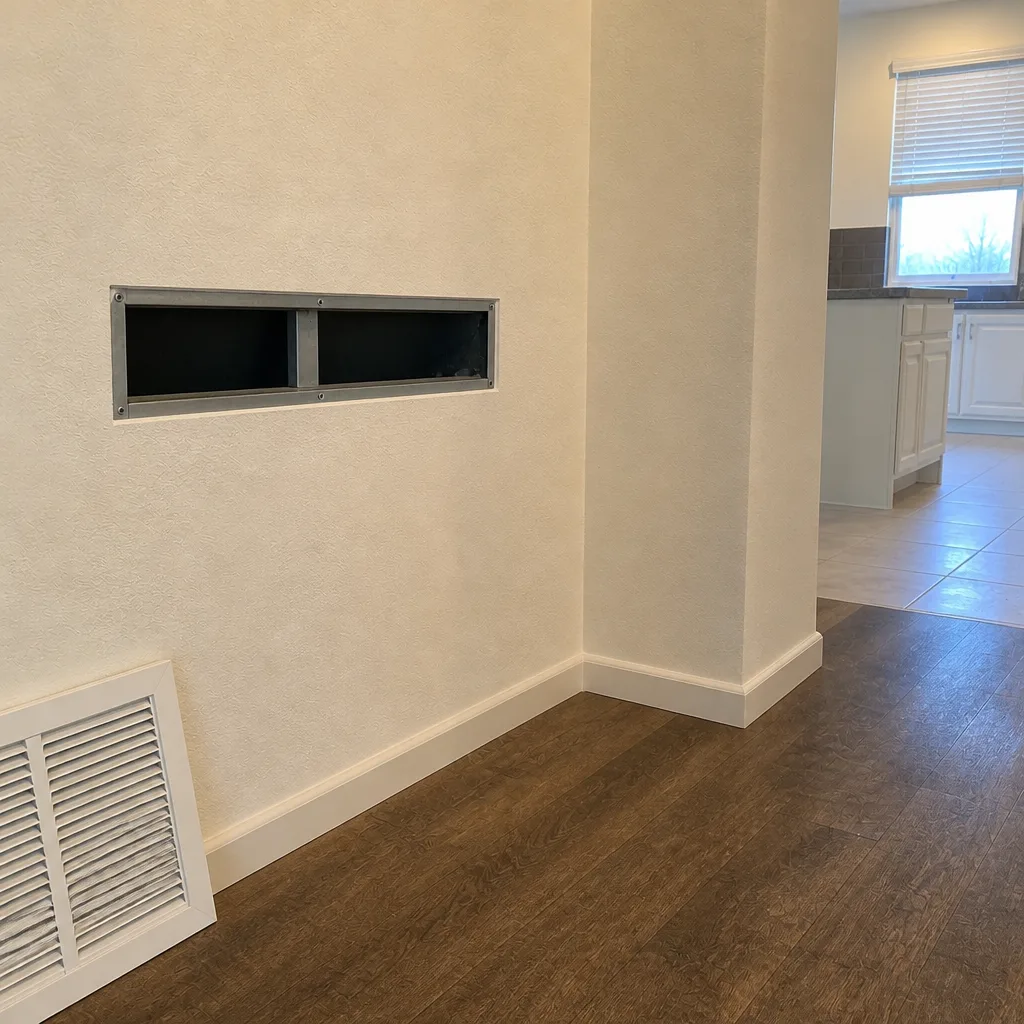
Whole-system duct and dryer vent check with before-and-after photos - you see exactly what came out of your vents
That "$99 whole-house special" is a bait ad - the real number appears once they are in your hallway, or the "clean" is a shop-vac at the register. We photograph the inside of your ducts before and after instead.
Choosing the Right Air Duct Cleaning Brand: A Buyer’s Guide for Fairfield
Any HVAC company can add “duct cleaning” to its service list. Very few invest in the equipment that makes the claim true. A professional negative-air machine paired with a rotary brush system runs a serious capital cost, and that cost is exactly why most generalists skip it and show up with a portable vacuum instead. So when you’re comparing duct cleaning companies in Fairfield, the smartest question isn’t “who has the best reviews?” or “who’s cheapest?” It’s simpler and harder to fake: what equipment will actually be in my driveway? This guide teaches you how to read a contractor’s tools the way a tradesperson does, verify the claims, and spot the difference between cleaning and redistributing.
Quick Answer
The right air duct cleaning brand for your Fairfield home is the one that uses purpose-built source-removal equipment: a rotary brush system like Rotobrush for contact cleaning, a high-CFM negative-air vacuum like Nikro to extract what’s loosened, and HEPA filtration like Abatement Technologies to contain it. Brand names and model classes on a company’s site are a fair proxy for quality. Vague “professional equipment” language is not. Ask to see the machine before work starts and confirm it matches what they advertised.
Styles & brands we work with
- Whole-home duct cleaning
- Dryer vent cleaning
- Camera inspection
- Sanitizing & deodorizing
Table of Contents
- Why Equipment Beats Marketing When You Compare Duct Cleaners
- What a Rotobrush System Does That a Brush Kit Can’t
- Negative-Air Machines and Why CFM Ratings Matter
- How to Verify a Contractor Actually Owns the Equipment
- Residential Flex Duct vs. Commercial Sheet Metal
- The Questions That Expose Vague Equipment Claims
- Why Cleaning Without Repair Leaves the Job Half Done
- Common Mistakes to Avoid
- When to Call a Professional
Why Equipment Beats Marketing When You Compare Duct Cleaners
Duct cleaning is one of the few home services where the tool determines whether the job works at all. A technician with a shop-vac and a flexible brush can make a vent look cleaner from the floor. What happens inside the trunk line is a different story. Real duct cleaning is source removal: loosening accumulated debris from every surface of the ductwork and extracting it out of the system under negative pressure so it doesn’t migrate into your living space.
That’s a two-part mechanical problem, and it needs two pieces of equipment working together. Agitation loosens the debris. Extraction pulls it away. Skip either one and you’re either leaving the dirt in place or blowing it around.
Here’s the part competitors don’t advertise. The equipment required to do this properly is expensive. That capital cost is the clearest signal of whether a company treats duct cleaning as a dedicated craft or as an add-on to HVAC repair. When you see Rotobrush, Nikro, or Abatement Technologies named on a company’s site, that company spent real money on the tooling. When you see “we use the latest technology” with no names, keep asking questions.
This is how we approach air duct cleaning in Fairfield. The tools come first, the service description second. It’s also the lens this guide will teach you to use on every quote you collect.
What “Professional Equipment” Should Mean
- Named brands and model classes, not marketing phrases like “advanced technology.”
- Rotary brush contact cleaning, not air-whip-only methods.
- High-CFM negative air pressure with a stated containment strategy.
- HEPA filtration rated for the particulate being captured.
- Verification – the machine on hand matches the machine on the website.
What a Rotobrush System Does That a Brush Kit Can’t
A Rotobrush system is a purpose-built rotary brush machine designed to make continuous physical contact with the interior surface of the duct while a vacuum pulls material away from the brush head. That combination is the core of source removal, and improvised brush kits can’t replicate it.
Continuous Vacuum Contact at the Brush Head
Material loosened by the brush has to travel. If the vacuum isn’t connected at the brush head, loosened debris settles back on the duct wall within seconds. Continuous contact means the surface is cleaned in one pass rather than disturbed in the hope something else removes it later.
Forward-Camera Inspection
Rotary brush systems often pair with forward-facing cameras that let the technician see what the brush is reaching. That matters enormously in residential flex duct, where runs bend, sag, and sometimes hide a disconnected joint. Without visual confirmation, “cleaned” is a guess.
Variable-Speed Agitation Matched to Duct Material
Sheet metal runs, flex duct, and ductboard all respond to different brush speeds and pressures. A single-speed improvised tool can damage flex duct or leave metal surfaces under-worked. Variable speed is the difference between a clean duct and a punctured one.
Rotobrush systems cost far more than a hardware-store brush kit, which is exactly the point. The capital investment is the story. It’s why a dedicated duct cleaning company tends to own one and a generalist HVAC company usually doesn’t. Our technicians have up to experience running this class of equipment, and the difference in how the job goes is obvious in the first ten minutes.
Negative-Air Machines and Why CFM Ratings Matter
Agitation loosens the debris. Negative air extraction pulls it out and keeps it out. If the extraction side of the job is undersized, the whole job becomes a redistribution problem: the brush dislodges decades of accumulated material, and airflow pushes it into rooms you thought were clean.
A whole-house negative-air system needs real CFM. Minimum containment for residential duct cleaning generally runs in the thousands of CFMs, and the machine has to hold that pressure while the brush moves through every branch of the system. Portable shop-vacs don’t come close. Purpose-built Nikro-style machines do.
The Three Stages of Proper Containment
- Negative pressure established on the duct system before any agitation begins.
- HEPA filtration capturing particulate as it’s pulled through the machine, not exhausting it back into the room.
- Connected containment at the register openings so no loosened material escapes at the vents.
Abatement Technologies HEPA equipment is the same standard applied in remediation and containment work. That doesn’t just mean the machine has a filter. It means the filtration is engineered for fine particulate, not just large debris, and it’s set up so what goes in doesn’t come back out.
In Fairfield, homes often pull air from a mix of older flex duct and metal runs, and the particulate sitting inside can include construction dust from renovations, drywall fines, and years of ordinary household dust. Capturing it during cleaning matters. If a company can’t describe their containment setup in this much detail, they may not have one.
How to Verify a Contractor Actually Owns the Equipment
Anyone can put a logo on a website. The question is whether the machine exists. Here’s a straightforward verification routine that eliminates the guesswork.
- Ask which specific brands and model classes will be used before you book. A confident company names them without hesitation.
- Ask to see the equipment before work starts. A dedicated duct cleaner will happily walk you to the truck and show you the rig. Expecting to do this is normal.
- Check for serial number plates and manufacturer branding. Rotobrush and Nikro machines are visibly branded, not repainted generics.
- Compare the machine to what’s on their website. If the site says one system and a different one shows up, ask why. That’s the whole test.
- Ask what HEPA filtration they use and why. A real answer will reference particulate capture. A vague answer will not.
- Ask about before-and-after photos. Not stock images. Photos of your own ducts, taken during the job.
If a company stalls on any of these, that’s the information you needed. It’s fine to say so and move on. There are plenty of Fairfield homeowners who’ve learned the same lesson the hard way.
Why This Test Works So Well
Reviews are easy to game. Price is easy to fake with a coupon that disappears once the technician is on-site. Even a good website can be assembled in a weekend. Equipment claims are hard to fake because the machine has to physically show up in your driveway. When a company is willing to show you the tool and explain how it works, you’re talking to an operator. When they dodge, you’re talking to a reseller who’s going to farm out the work.
Residential Flex Duct vs. Commercial Sheet Metal
The equipment that’s right for a house isn’t the equipment that’s right for a commercial building, and vice versa. A contractor who owns only one setup will underperform on the other. That’s not a knock on their effort. It’s a tooling problem.
Residential Systems
Fairfield homes typically run flex duct through attics, crawlspaces, and interior chases. Flex duct has ridges, sags, and tight bends, and it’s forgiving of nothing. Brush pressure, rotary speed, and camera inspection all matter more here than anywhere else. Sheet-metal-only equipment over-agitates flex duct and can tear the liner.
Light-Commercial Systems
Sheet metal trunk lines and large-bore commercial ductwork need different brush heads, more CFM, and a containment plan that scales to the building’s air volume. A residential rig that manages a house won’t manage a light-commercial space, and a commercial rig is overkill for a two-vent residential job.
Property managers around Fairfield who handle both kinds of systems end up using two contractors if they aren’t careful, because a single contractor rarely owns the full range of equipment. Asking up front which class of system they’re set up for will save you a call.
The Questions That Expose Vague Equipment Claims
“We use professional equipment” is a phrase that can mean anything. These questions turn it into specifics.
- Which specific systems will you bring? Rotobrush, Nikro, Abatement Technologies, or other named brands. Not “the best on the market.”
- What is the CFM rating of your negative-air machine? If the answer isn’t a number in the thousands for a whole-house job, keep asking.
- What HEPA filtration do you use? The correct answer names a system designed for fine particulate.
- Do you have a camera system for duct inspection? If not, how do you know what the brush reached?
- How do you verify the work afterward? Before-and-after photos of your ducts are the honest answer.
- What’s your attachment and containment process at the registers? This is where containment fails first.
- What’s included in the price and what isn’t? The best answer is “one flat price per system, agreed before we start.”
You don’t need to be an equipment expert to ask these. You just need to notice whether the answers stay specific. A company that runs real gear answers all seven without scrambling.
Why Cleaning Without Repair Leaves the Job Half Done
Here’s the part most duct cleaning companies don’t want to talk about. Cleaning removes the contamination. It doesn’t fix what caused it. If a joint is disconnected, a run is crushed, or a boot seal has failed, the system will re-contaminate from the same source, and the cleaning you paid for degrades faster than it should.
Air duct repair as a standalone service is what closes the loop. We repair what we find, not just clean over it. In our experience, disconnected flex runs, failed tape at the plenum, and crushed attic runs are the most common findings during a first cleaning, and none of them are problems a customer can see from inside the house.
That’s why we treat duct repair as one of three core services rather than an upsell. A cleaning without addressing a structural source is a partial fix, and for a customer who has been chasing allergy symptoms or wondering why the upstairs never feels right, that gap is exactly where the disappointment lives. If you’re cleaning because something feels off, the repair side of the job often matters more than the cleaning itself.
What Repair Typically Involves
- Sealing disconnected joints in flex duct runs.
- Repairing crushed or kinked runs that restrict airflow.
- Resealing boots and register connections.
- Repairing tears in duct liner or insulation.
- Addressing leaks at the plenum and trunk transitions.
The Fairfield housing stock ranges from older single-story homes with original ductwork to newer construction that’s already had a renovation or two, and the findings differ. Older systems tend to show failed sealing at joints. Newer systems often show crushed runs from renovations that compressed ductwork in a tight attic. Both are fixable, and both affect how well a cleaning holds.
Common Mistakes to Avoid
- Choosing on price alone. A very low quote usually signals undersized equipment, per-vent pricing that balloons once the technician is on-site, or a franchise model bundling upsells. The written estimate needs to be one flat price per system, agreed before work starts.
- Believing “we use the latest technology.” That phrase could describe anything from a shop-vac to a proper rig. Ask for names and model classes, and confirm them on the machine itself.
- Skipping the repair side. Cleaning a duct system with a disconnected run is time and money wasted. If the contractor doesn’t offer repair, ask how they’ll address structural problems they find.
- Not asking for before-and-after photos. Any honest contractor can show you the inside of your ductwork before and after the job. If they can’t, you have no way to verify the work was actually done.
- Assuming the “duct cleaning” add-on from your HVAC company is the same thing. An HVAC technician with a brush attachment on a shop-vac isn’t running the same class of equipment as a dedicated duct cleaning company. The results are different, and so is the time required.
- Forgetting the dryer vent. Dryer vent cleaning is a recognized fire-prevention measure, not a bonus. If a company offers it as an add-on afterthought, that tells you something about their scope.
- Ignoring indoor air quality after cleaning. Cleaning the ducts creates a clean baseline. What happens next, whether that’s filtration, humidification, or leaving the system as-is, is a separate decision. Ask whether the contractor works with platforms like Honeywell or Aprilaire so the cleaning isn’t the end of the conversation.
When to Call a Professional
If you’re seeing visible dust blowing from registers when the system turns on, hearing whistling or rattling from ductwork, or noticing that one room in the house never gets the airflow it should, it’s time for a professional inspection. These symptoms often trace back to disconnected or crushed runs, not just accumulated debris, and cleaning without repair will not solve them. If anyone in the home has been dealing with allergy symptoms that seem worse indoors, or if you’ve recently completed a renovation that generated significant dust, a full duct inspection is worth scheduling. If your ductwork has never been cleaned, a first inspection establishes a baseline. Duct Cleaning Fairfield offers free estimates in Fairfield. Call (844) 834-3074.
For DIY-minded homeowners, this is one of those jobs worth outsourcing to a trained professional. The safety of the system itself depends on the equipment being operated correctly, and a shop-vac in the wrong hands can push contamination into the living space. If you’re curious about the broader service, Duct Cleaning Fairfield covers the full picture, and dryer vent cleaning is a separate, equally important job.
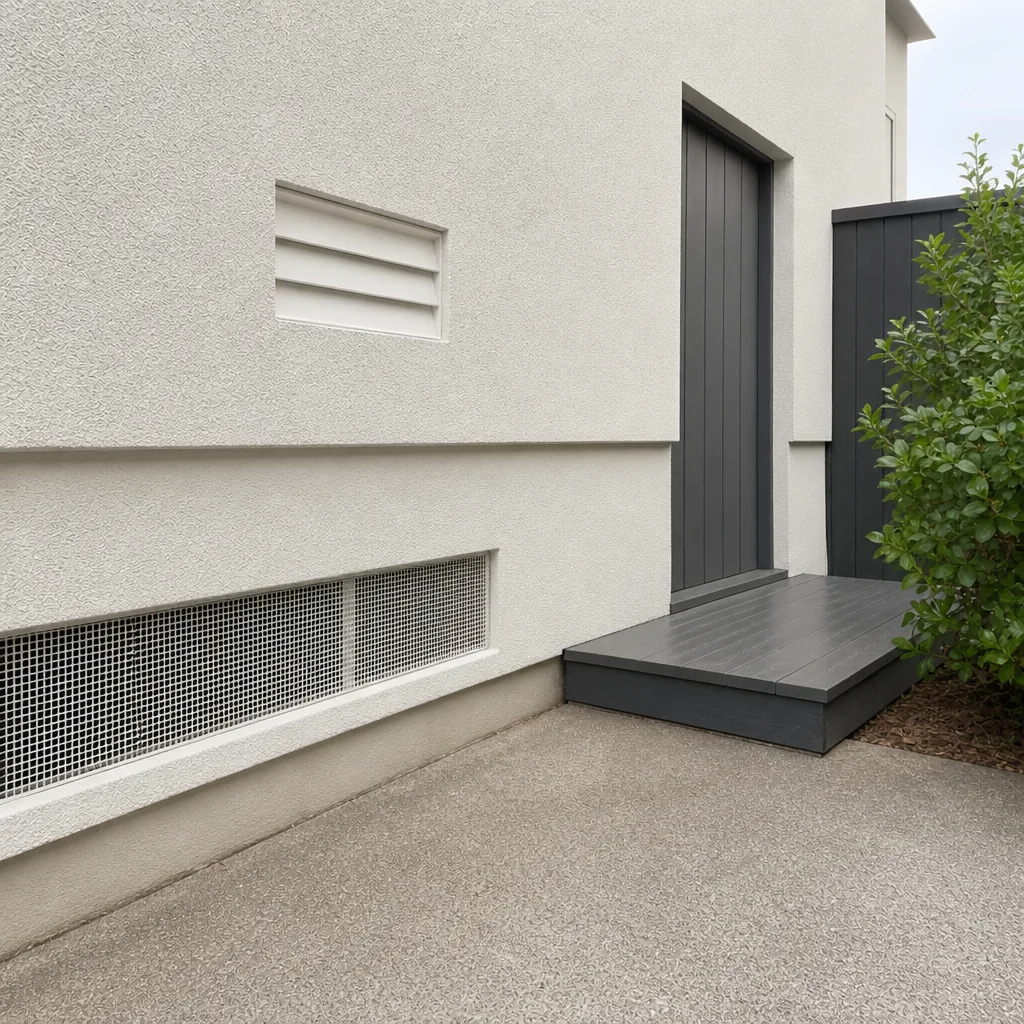
See the difference
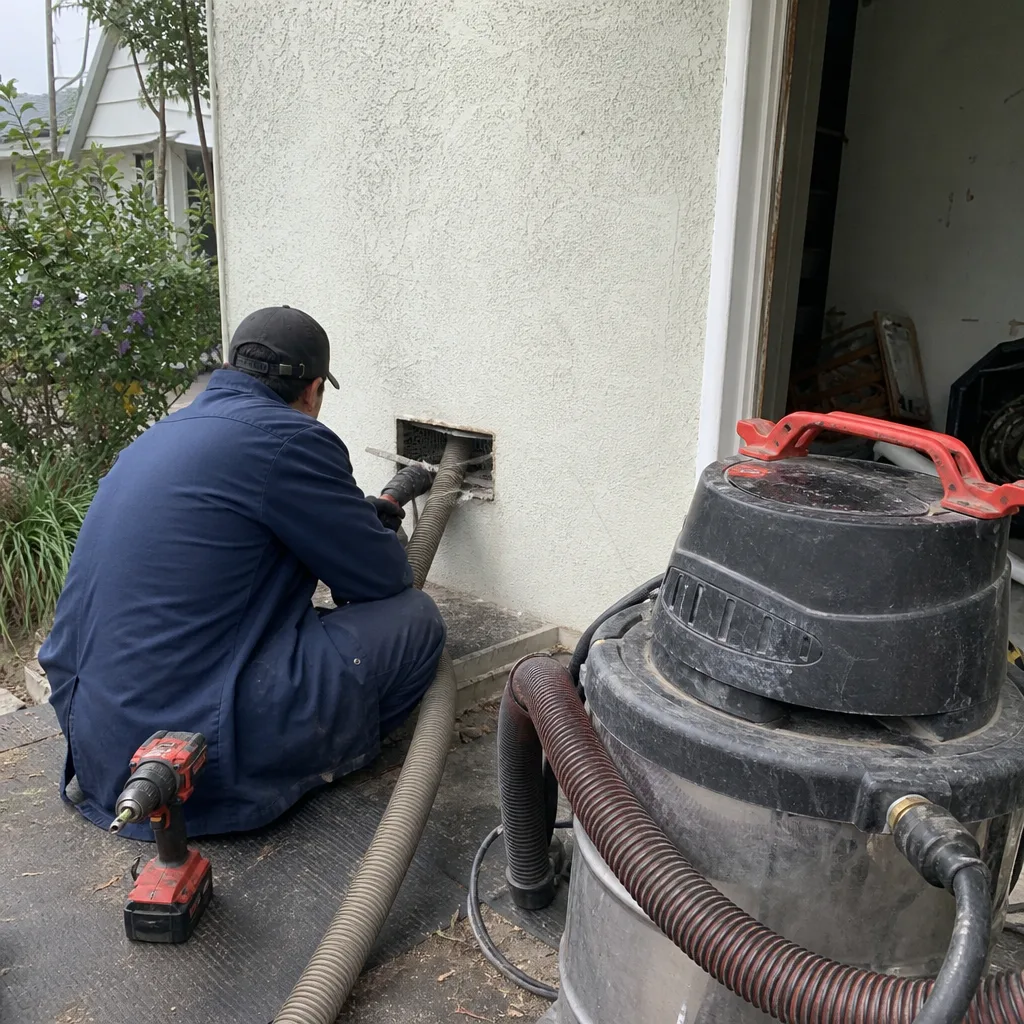 Before
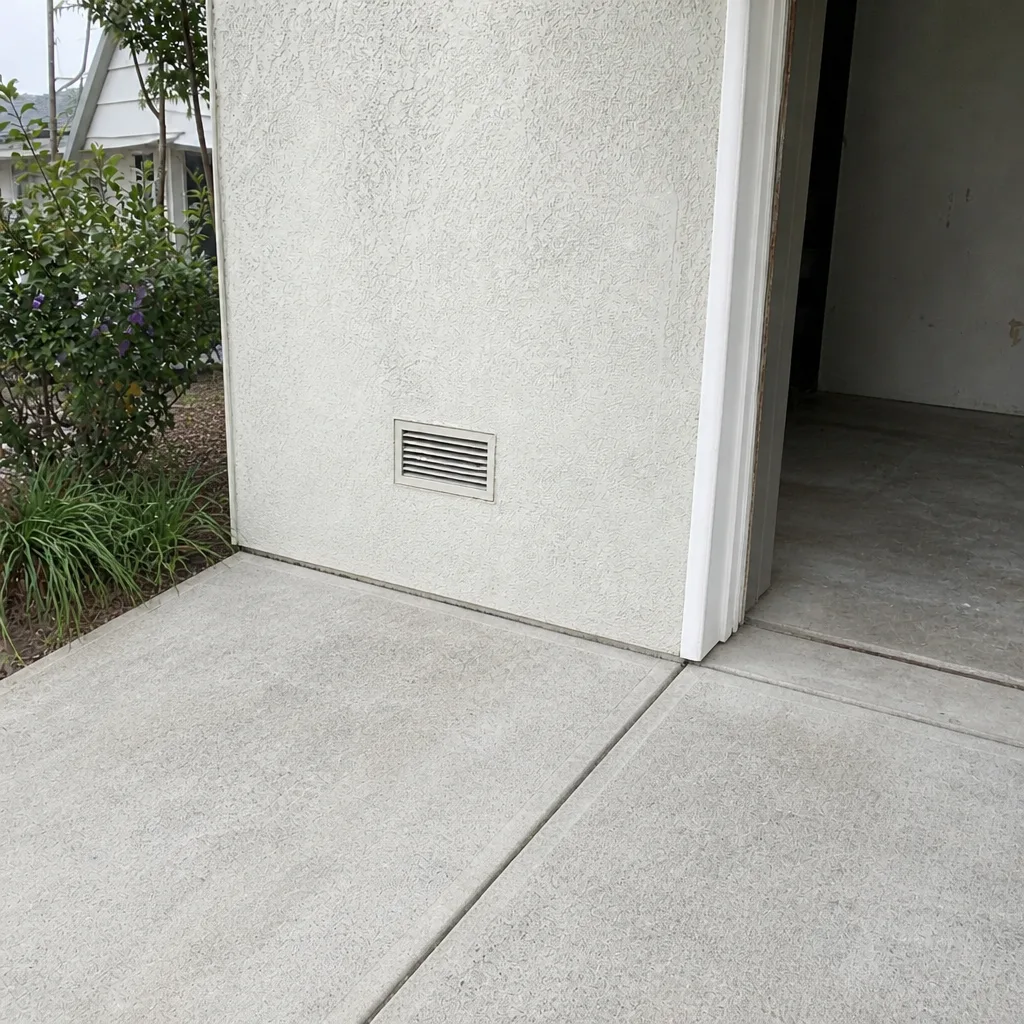 After
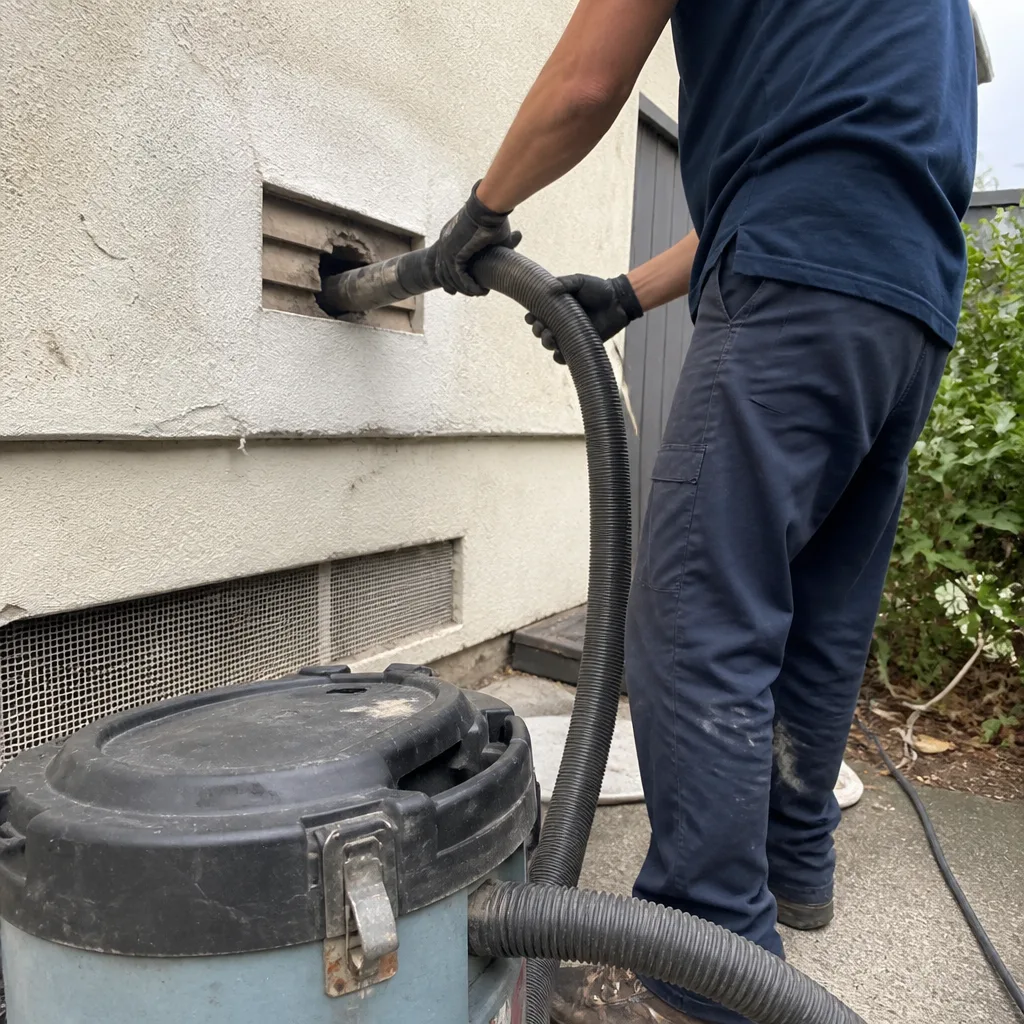 Before
 After
 Before
 After
Frequently Asked Questions
The three names to know are Rotobrush for rotary brush cleaning, Nikro for high-CFM negative-air extraction, and Abatement Technologies for HEPA containment. A company that names all three is running a full source-removal setup. Any contractor who can’t name their equipment isn’t operating at that level.
Pricing varies by the size of the system and the number of runs, but expect a whole-house estimate based on the system, not per vent. A single flat price per system, agreed before work starts, is the honest structure. Call (844) 834-3074 for an exact quote. Estimates are free.
Usually because the equipment is cheaper. A shop-vac and a brush kit cost a fraction of a Rotobrush system and a Nikro negative-air machine, so those companies can charge less. The tradeoff is that the cleaning doesn’t extract debris the way a proper rig does. It mostly just dislodges it.
Before-and-after photos of your own ducts are the simplest proof. Ask to see them. A contractor with a camera inspection system can show you exactly what changed. If they can’t, you have no way to verify the work.
Most homes don’t need annual cleaning. If you’ve recently renovated, moved in, or noticed symptoms that point to contamination, it’s worth an inspection. Otherwise, spacing cleanings out over several years is often reasonable. The right interval depends on the home, not a sales cycle.
Yes. We work with Honeywell and Aprilaire air quality platforms, which means cleaning can connect to filtration, humidification, or UV treatment as a next step. The cleaning creates a clean baseline. What gets added afterward is a separate conversation about what the home actually needs.
Yes. Air duct repair is one of our three core services. If we find a disconnected run, a crushed section, or failed sealing while cleaning, we can address it rather than clean around it. That’s the difference between a clean duct system and a clean duct system that stays clean.
Residential flex duct needs variable-speed rotary agitation, careful brush pressure, and camera inspection. Light-commercial sheet metal needs different brush heads, higher CFM, and a containment plan sized to the building. A contractor who only owns one type of setup will underperform on the other, so ask which class of system they’re set up for.
The Bottom Line
Equipment is the most reliable proxy for duct cleaning quality you have. It’s harder to fake than reviews, more honest than price, and more specific than any “professional service” claim on a website. Rotobrush, Nikro, and Abatement Technologies each solve a specific part of the job, and a company that owns and uses all three is doing source removal the way it’s supposed to be done. When you’re comparing quotes, ask for brand names, ask to see the machine, ask for the containment plan, ask for before-and-after photos, and ask whether they repair what they find. Those five questions will separate the specialists from the generalists in about six minutes. If you’re ready to see what proper equipment looks like in a real duct cleaning, the team at Fairfield is available to walk you through it.
Call (844) 834-3074. We answer 24/7. Fast dispatch from 7am to 7pm, Sunday through Friday. Estimates are free, licensed and insured, and one flat price per system is agreed before work starts. We’re closed Saturday. When you call, you’ll speak with someone who can walk you through the equipment and answer every question in this guide without dodging.
Written by the team at Duct Cleaning Fairfield.