
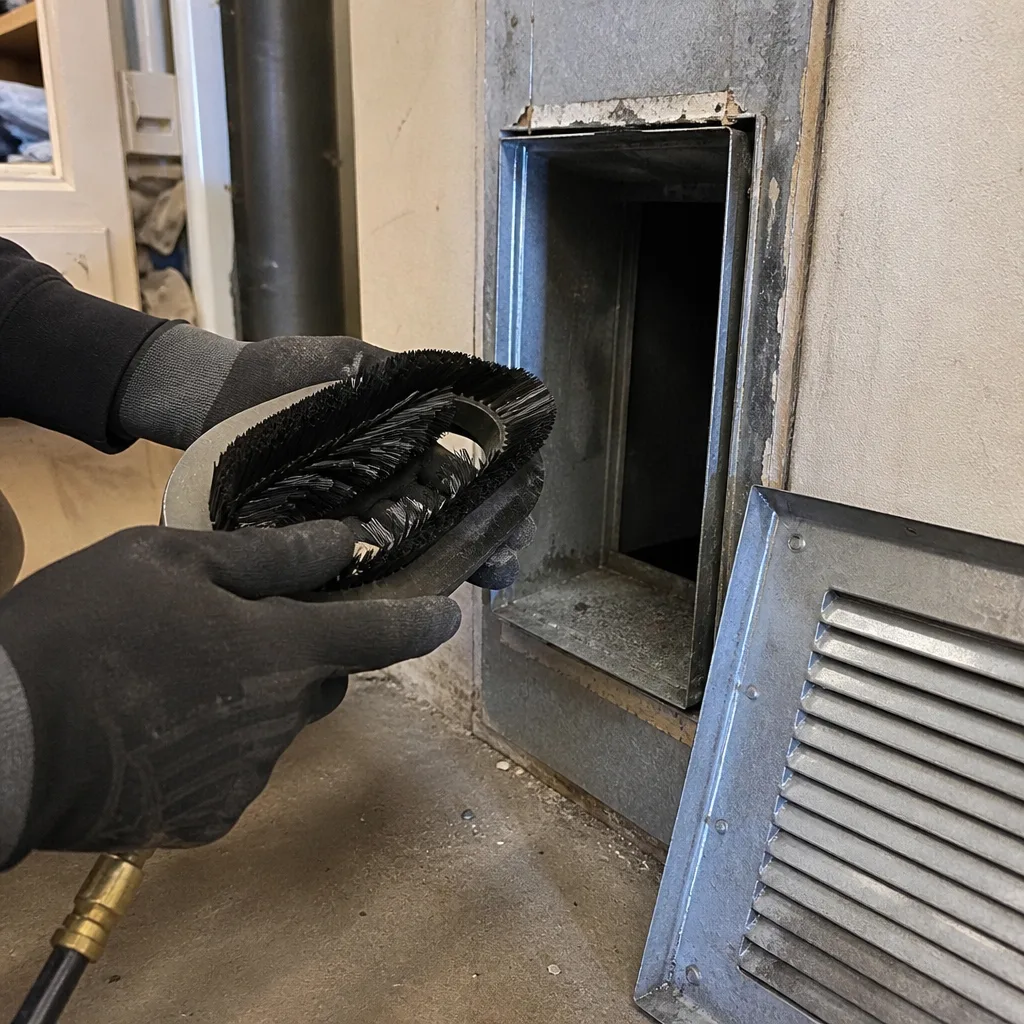
Last updated November 16, 2026
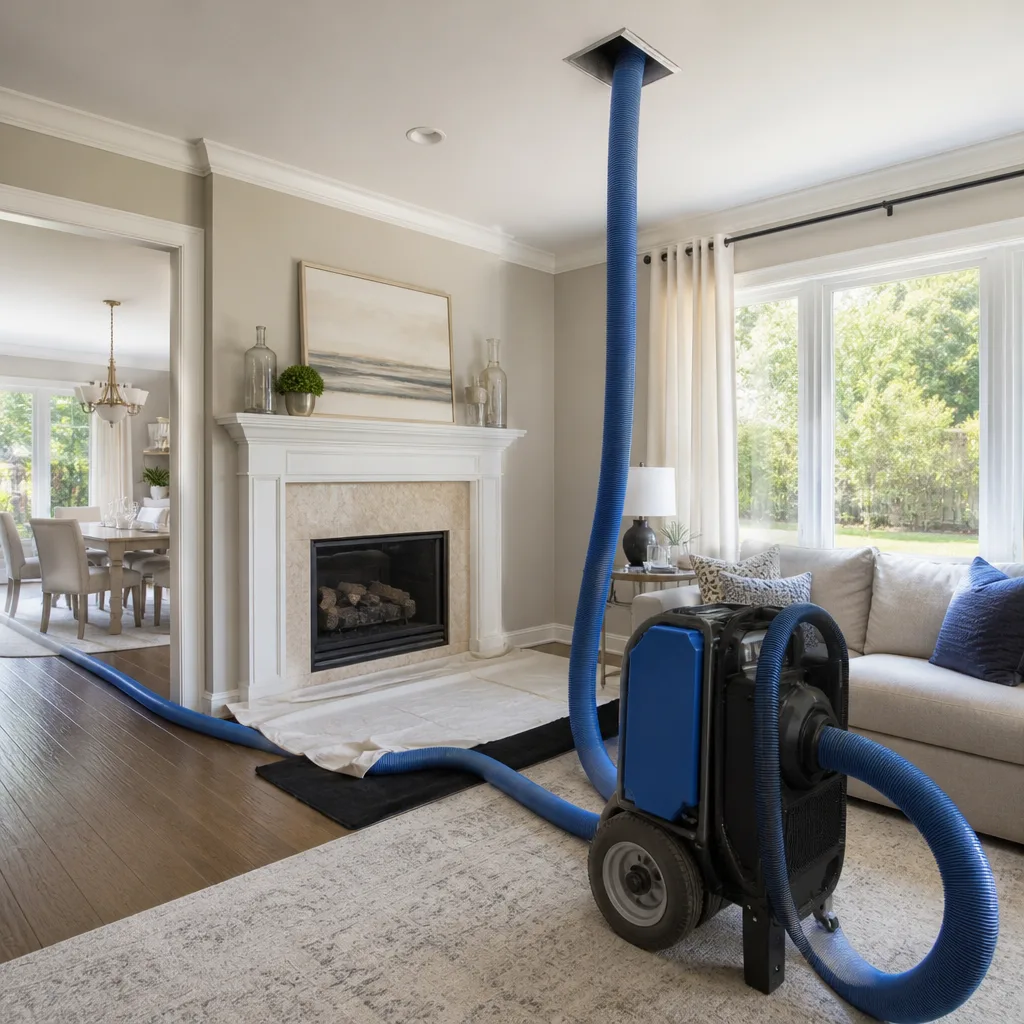 Whole-home duct cleaning
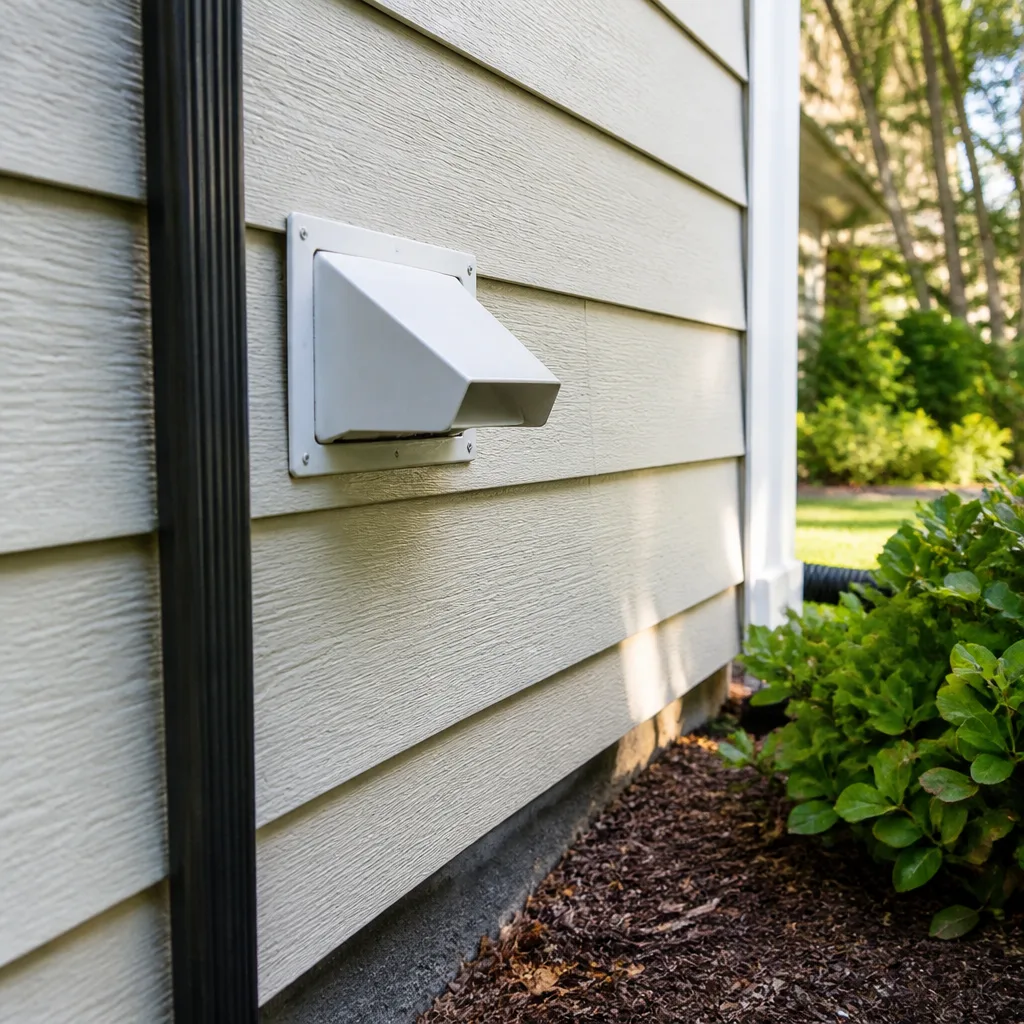 Dryer vent cleaning
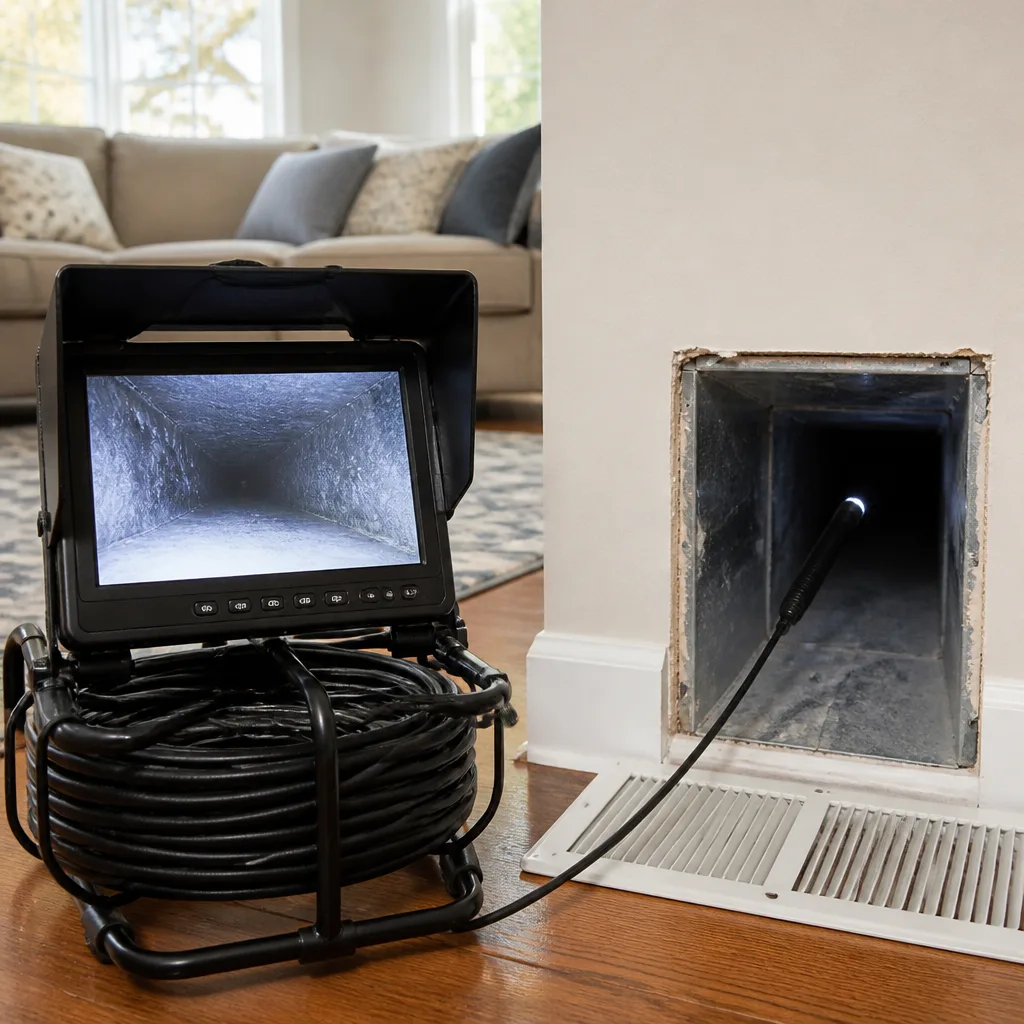 Camera inspection
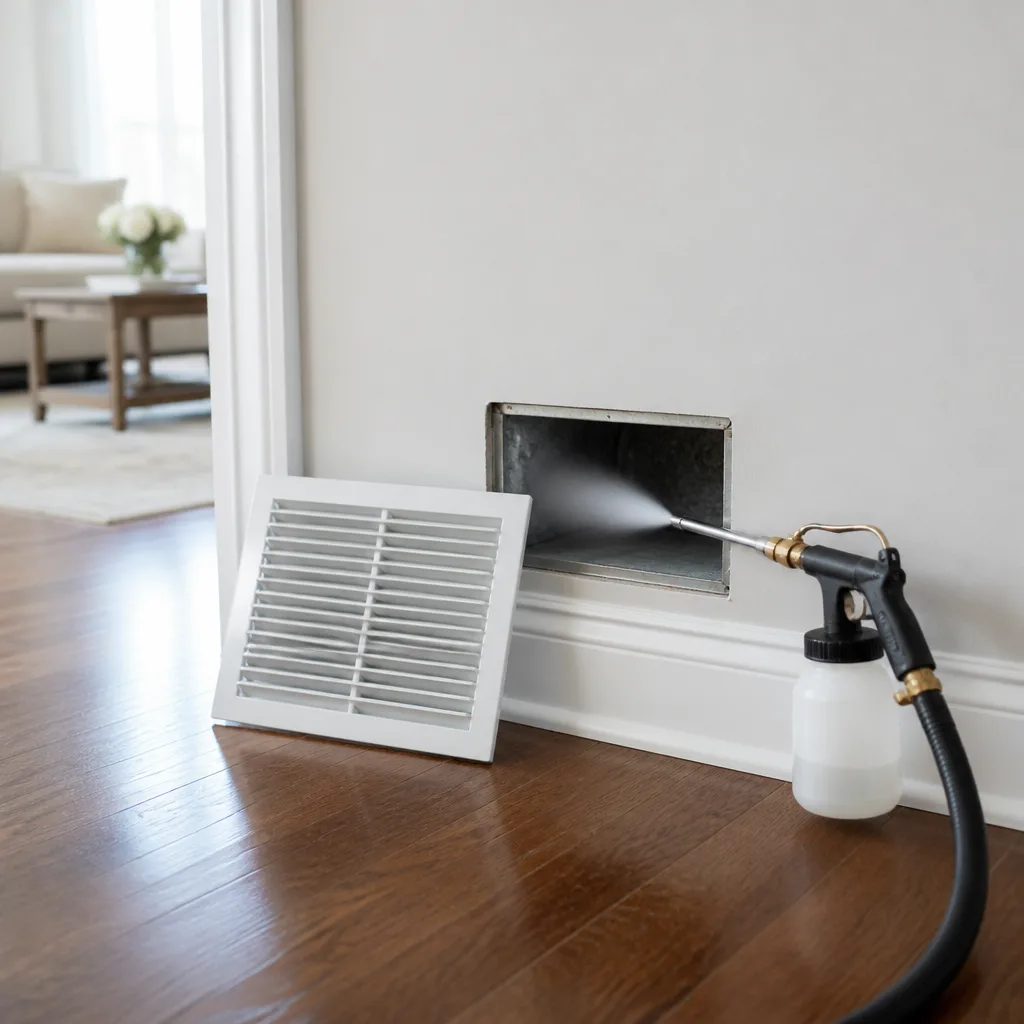 Sanitizing & deodorizing
Whole-system duct and dryer vent check with before-and-after photos - you see exactly what came out of your vents
That "$99 whole-house special" is a bait ad - the real number appears once they are in your hallway, or the "clean" is a shop-vac at the register. We photograph the inside of your ducts before and after instead.
How to Hire an Air Duct Cleaning Contractor in Fairfield: A Step-by-Step Guide
The most common duct cleaning bait-and-switch in California doesn’t start with a bad review or a shady website. It starts with a low whole-house offer that looks harmless. The Federal Trade Commission has documented the pattern: advertise an entry price that’s too good to be true, then upsell “mold treatment,” “sanitizer,” and “sealant” once the technician is standing in your hallway. Fairfield homeowners run into this regularly, and the usual advice to “just be skeptical” doesn’t help much when both the real specialist and the scam show up in a van with hoses. What actually protects you is knowing the exact questions to ask before anyone books a slot.
Quick Answer
To hire an air duct cleaning contractor in Fairfield, verify three things before you book: the equipment (a truck-mounted or high-CFM vacuum, a rotary brush system, and true HEPA containment), the contractor’s credentials (a valid California C20 HVAC license and NADCA membership as a baseline, not a guarantee), and the quote structure (line-item pricing or a flat whole-house rate with a written scope). Ask for before-and-after camera photos as a deliverable. A contractor who can answer all of that in plain language is usually the real thing; one who dodges the equipment question rarely is.
Styles & brands we work with
- Whole-home duct cleaning
- Dryer vent cleaning
- Camera inspection
- Sanitizing & deodorizing
Table of Contents
- Why Hiring a Duct Cleaner in Fairfield Is Harder Than It Looks
- The Three Equipment Questions to Ask Before You Book
- What NADCA Membership and a C20 License Actually Verify
- How to Read a Duct Cleaning Quote Line by Line
- Red Flags Specific to the Fairfield Market
- What a Legitimate Post-Job Deliverable Looks Like
- The Step-by-Step Hiring Process
- From Cleaning to Whole-Home Air Quality
Why Hiring a Duct Cleaner in Fairfield Is Harder Than It Looks
Fairfield sits in a part of Solano County that traps its share of dust. The surrounding hills and the dry summer wind off the inland valleys push fine particulate into homes, and older housing stock around the downtown and Cordelia areas often has ductwork that hasn’t been touched since the HVAC system went in. That combination creates steady demand, and steady demand attracts operators who want volume more than they want a clean job.
Here’s the problem that makes choosing unusually difficult. There are almost no visible signals separating a legitimate duct cleaning specialist from an operation that owns one shop vac and a good ad budget. Both drive to your house. Both carry hoses. Both can put up a website. The star rating in a search result doesn’t distinguish them, because lowball operators tend to collect reviews fast on small jobs before the complaints roll in. Price doesn’t distinguish them either, for the same reason.
What does distinguish them is equipment, process, and verifiable credentials. Those are the three buckets we’ve organized this guide around, and they’re the same three things we check when we’re evaluating our own work. Fairfield residents deserve a clear framework, so let’s build one.
One piece of context before we start. Duct cleaning is one category of work, not a general HVAC catch-all. When you’re evaluating a contractor, you’re evaluating a specialist, and the questions below assume that. If you want the broader service overview first, our Duct Cleaning Fairfield homepage covers the core scope.
The Three Equipment Questions to Ask Before You Book
Every legitimate duct cleaning contractor should be able to answer these three questions in plain English over the phone, before anyone shows up. If they can’t, that alone tells you something.
1. What’s your vacuum CFM rating, and is it truck-mounted or portable?
CFM stands for cubic feet per minute, and it measures how much air the vacuum can move. The point is not to memorize a magic number. The point is whether the contractor knows their own equipment’s rating at all. A serious operator knows. A shopper with a consumer-grade rig won’t, because consumer vacuums don’t come with CFM ratings worth quoting. Ask whether the vacuum is truck-mounted or portable, and ask how the system creates negative pressure so dislodged debris actually leaves the house instead of drifting into the living room.
2. What brush system do you use?
Air-whip cleaning alone dislodges debris, but it doesn’t physically contact the duct walls. A rotary brush system does. Contractors who run Rotobrush rotary equipment can explain the difference between contact cleaning and air-whip-only methods, and why the brush matters on the caked-on material that builds up over years. If the answer is “we use air” and nothing else, ask what happens to the debris that’s stuck to the surface.
3. How do you contain particulates during the job?
Negative pressure pulls air inward through the system so the vacuum captures it before it escapes. High-CFM equipment like Nikro vacuum units provide that negative air pressure. Containment is the second layer, and this is where HEPA filtration separates serious operators from everyone else. HEPA equipment from Abatement Technologies is the same standard applied in remediation and containment work, which means particulates are captured, not just dislodged into your indoor air. If a contractor can’t describe how their setup creates containment, they don’t have one.
All three questions have the same tell: a real specialist answers them in detail because they’ve thought about it, and a generalist pauses because it’s an add-on service to them, not a craft.
What NADCA Membership and a C20 License Actually Verify
Two credentials come up repeatedly in duct cleaning research, and they don’t mean what most homeowners assume. Here’s the honest breakdown.
What NADCA membership verifies
NADCA, the National Air Duct Cleaners Association, publishes a standard for how duct cleaning should be performed (the ACR standard). Membership signals that a contractor has committed to that standard and, for the certifications that follow membership, that they’ve passed an exam on it. What it does not do is inspect the contractor’s work, audit their equipment, or guarantee the job you get is a good one. A NADCA member is a better baseline than a non-member, but membership is a floor, not a ceiling. Treat it as one data point rather than a complete answer.
Why a California C20 license matters more than most homeowners realize
In California, HVAC work falls under the C20 Warm-Air Heating, Ventilating and Air-Conditioning Contractor license class issued by the Contractors State License Board. That license matters for duct cleaning specifically because of scope. Cleaning alone is one thing. But the moment a job involves repairing duct connections, sealing leaks, replacing flex runs, or touching the HVAC system, you want the contractor holding a C20 license, because that’s the license class that covers the work. Duct cleaning companies that don’t hold one may be limited to cleaning, even when the ducts clearly need repair. A C20 license means the contractor can close that loop.
Verify the license on the CSLB website yourself before you book. It takes two minutes, and it’s the single most useful credential check available in California.
One more thing to check while you’re at it: insurance. A contractor carrying general liability coverage and offering a certificate of insurance on request is telling you they expect to be held accountable if something goes wrong in your home.
How to Read a Duct Cleaning Quote Line by Line
Duct cleaning quotes in Fairfield fall into three general structures, and each one tells you something about the process behind it. A contractor who prices the same way every time and explains the structure is usually more trustworthy than one whose quote structure shifts depending on who they’re talking to. Our air duct cleaning page shows how a clear scope is presented. Here’s how to interpret what lands in your inbox.
Flat-rate whole-house quote
One price for the whole system. This works if the scope is explicit: how many registers, how many main trunks, what’s included, what’s not. A flat rate with a written scope is a good sign. A flat rate with no scope and a “we’ll figure it out” vibe is not. Ask what happens if the technician finds more registers than expected.
Per-register or per-vent pricing
Some contractors price by the register. The risk here is that a low per-vent number becomes a large total once the count is confirmed, and marketing offers built around per-vent pricing often work this way. If a contractor quotes per-vent, ask for the total for your home’s actual register count in writing before booking.
Line-item pricing by scope
This breaks the job into components: number of trunk lines, number of branch lines, number of registers, plus any additional work like dryer vent cleaning or duct repair. Line-item pricing is the most transparent structure because you can see exactly what you’re paying for and see if the scope changes. It’s what we’d expect from a serious operation.
- Ask for the estimate in writing. A verbal ballpark is not a quote. The written version is what the final price is based on.
- Ask whether the estimate is free. It should be. If a contractor charges for an estimate, that’s worth a question.
- Ask what happens if the scope changes. Legitimate contractors re-quote in writing before proceeding. The bait-and-switch is the opposite: proceed first, invoice later.
- Do not accept a per-vent teaser price as the total. Confirm the whole-house number in writing.
Red Flags Specific to the Fairfield Market
Fairfield has a set of local patterns that come up again and again. These aren’t theoretical; they’re what homeowners in this market actually encounter. When you’re reading a quote or talking to a contractor, hold these up as a filter. For a wider look at the surrounding area, our Fairfield page has the geography and service context.
Door hangers and signs with sub-$100 whole-house offers
A whole-house duct cleaning advertised at a price most professionals would lose money on is not a duct cleaning job. It’s a foot-in-the-door. The lowball entry price exists so the technician can get inside, find “mold” or “buildup,” and sell the real job at a much higher number. The FTC has documented this pattern specifically, and it’s the reason “the quote went up after they arrived” is one of the most common complaints in this trade.
Contractors who won’t show you their equipment before starting
Any legitimate operator will show you the vacuum, the brush head, and the HEPA unit before work begins. It’s not a demanding request. It’s a thirty-second demo. If a contractor refuses, hedges, or says “the crew will bring it,” treat that as a pass and move on.
Sanitizer and “mold treatment” upsells with no evidence
Cleaning and sanitizing are different things. If a contractor claims mold or bacteria based on a quick look inside a register with no test and no documentation, that’s an upsell, not a finding. Ask what they’re basing the claim on. If there’s no camera photo or test result, there’s no claim.
No physical address, no license number, no written estimate
Any of these three alone is worth a second look. All three together is a no. Verify the C20 license on the CSLB site, ask for the estimate in writing, and confirm insurance on request.
Reviews that only mention price
Star counts alone don’t distinguish good work from cheap work. Read for specifics: did the reviewer mention equipment, camera documentation, or a walkthrough after the job? Those are the reviews that tell you something.
Dryer vent cleaning is another area where low-price offers show up, and the stakes are higher because vent lint is a fire risk rather than an air quality nuisance. Our dryer vent cleaning page explains what that service should include, and it’s a good cross-check on how a contractor treats a lower-cost job.
What a Legitimate Post-Job Deliverable Looks Like
When the job is done, the work should be documented, not just performed. A legitimate duct cleaning deliverable has three parts, and you should expect all three.
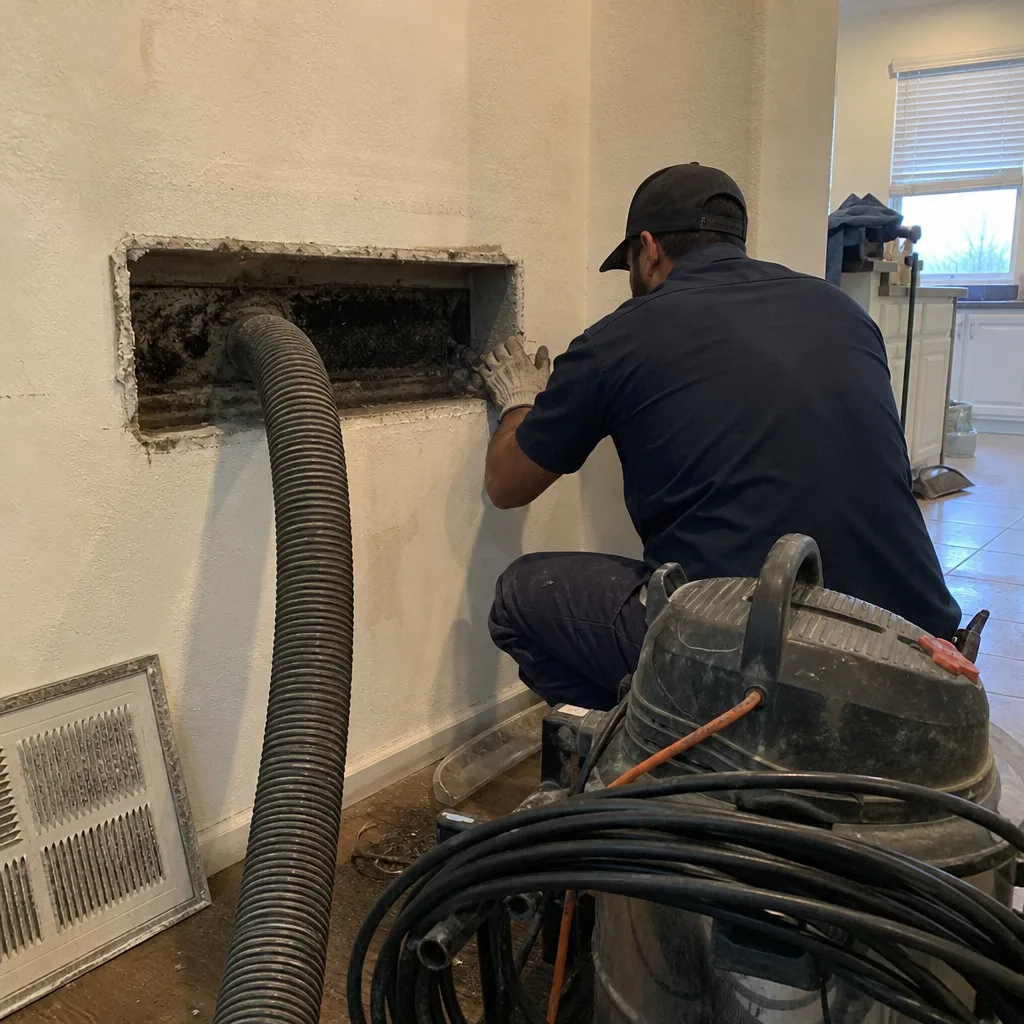
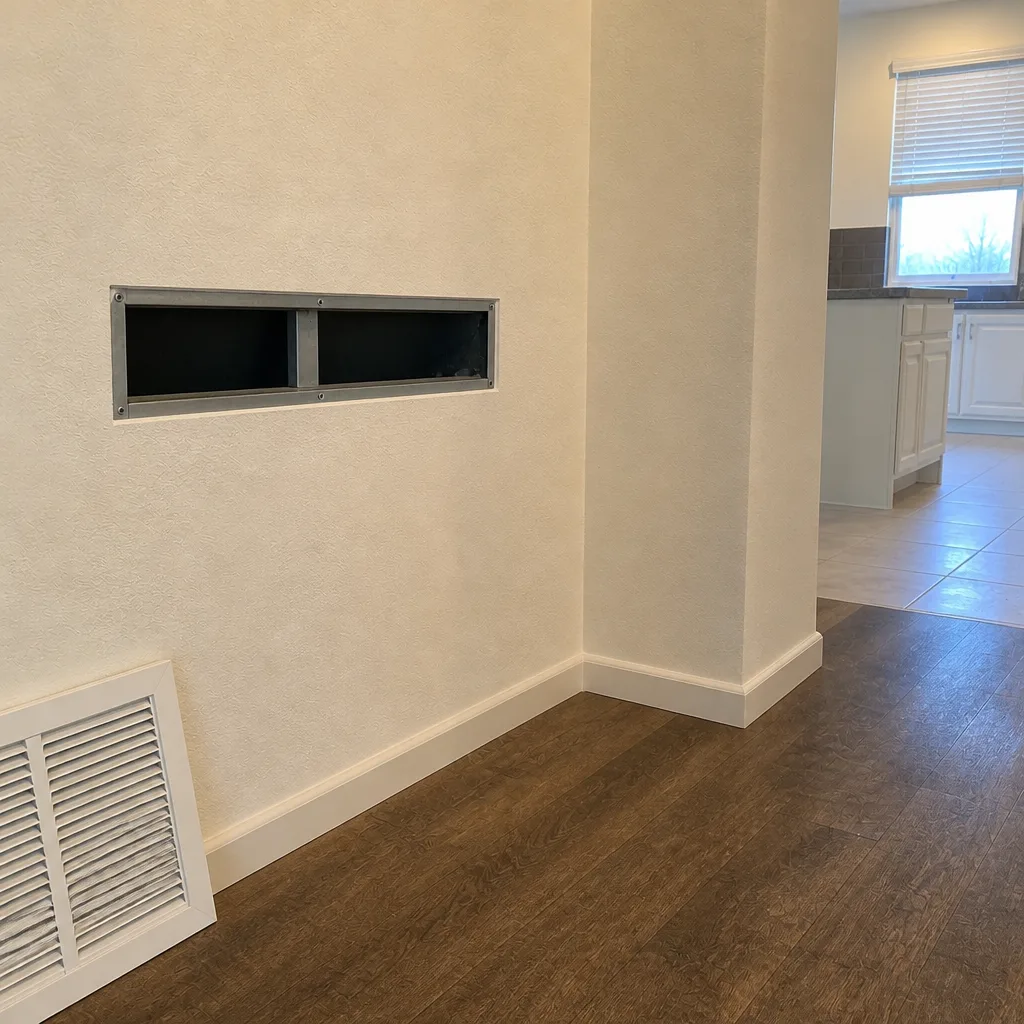
- Before-and-after camera photos of your own ducts. Not stock images from a brochure. Your ducts, your registers, the actual interior of the system, showing the difference. This is the single most useful piece of evidence a contractor can hand you.
- Written scope completion. The estimate you agreed to listed what would be cleaned and what wouldn’t. The completion document confirms each line was completed. It’s the paperwork equivalent of a punch list.
- A walkthrough of findings. A good technician will point out anything they found that wasn’t cleaned: a disconnected flex run, a crushed section, a register that was sealed but never connected. Findings are information you can act on later, and they shouldn’t be a surprise upsell at the end of the visit.
If a contractor can’t or won’t provide those three deliverables, that’s a hard stop. A duct cleaning job without documentation is a claim, not a service. Document evidence is also the difference between a job that was actually done and a job that was billed as done.
The Step-by-Step Hiring Process
Here’s the sequence we’d recommend to any Fairfield homeowner. It takes about a week and saves you from the worst outcomes.
- Define the scope of the problem. Do you want a routine clean, a post-renovation clean, or a diagnostic for a specific issue like musty smells or high dust? Different scopes need different conversations.
- Collect three quotes. Mix of specialist duct cleaning companies and generalist HVAC shops. You’re looking for structure, not just price.
- Ask the three equipment questions on the phone. CFM rating, brush system, containment method. Before booking, before visiting.
- Verify the C20 license on the CSLB site. Two minutes, and it’s the most useful California-specific check available.
- Request the estimate in writing. Confirm scope, register count, and whether the estimate is free.
- Ask for the deliverables in advance. Before-and-after photos, written scope completion, walkthrough. Any contractor who hesitates at this question fails the test.
- Confirm insurance on request. A certificate of insurance on request signals accountability.
- Book the job, and hold the final walkthrough. Be present for the walkthrough. Ask questions. It’s your home.
That sequence isn’t complicated, but it filters out most of what passes for duct cleaning in this market. It’s also what you’d expect from a Duct Cleaning Fairfield-style specialist who treats the work as a craft.
From Cleaning to Whole-Home Air Quality
Cleaning removes the standing buildup. But some homes need a next step, and the Fairfield climate makes that worth thinking through. Dry inland air and seasonal dust mean that in homes with allergies, first-time-parent concerns, or a recent renovation, cleaning alone may be the foundation rather than the finish.
That’s where air quality upgrades come in. A contractor who works with Honeywell and Aprilaire platforms can advise on whole-home filtration, humidification, or UV treatment as a follow-up after cleaning. Not every home needs it, and it shouldn’t be pushed. But the path matters: a specialist who can clean, repair, and recommend the right equipment is a single relationship rather than three. Our broader guide on air duct cleaning explains the cleaning process in more detail if you want to go deeper.
Air duct repair deserves a separate note here. Cleaning built-up debris out of a duct system with disconnected or crushed runs is like sweeping a floor with a hole in it. A specialist who can identify and repair the structural cause of contamination and energy loss is more valuable than one who cleans around it. We repair what we find, not just clean over it.
Common Mistakes to Avoid
- Booking on price alone. A lowball quote is the setup for the upsell. Compare structures and scope, not just the bottom line. The lowball’s whole purpose is to get inside; the invoice is what comes after.
- Skipping the equipment questions. CFM rating, brush system, and containment method separate specialists from shoppers in about thirty seconds. If you skip this step, you’re guessing.
- Treating NADCA membership as the whole credential. It means the contractor committed to the ACR standard. It does not mean they’ll do good work. Verify the C20 license and insurance too.
- Accepting a verbal estimate. The written estimate is what the final price is based on. If it’s not in writing, it’s not a quote.
- Not asking for camera documentation. Before-and-after photos of your own ducts are the highest-value deliverable you can request, and the contractor who produces them is the one who did the work.
- Assuming a sub-$100 whole-house offer is a real number. It isn’t. It’s a marketing hook. The number that matters is the whole-house scope quote in writing.
- Skipping the final walkthrough. Findings during the walkthrough are the most valuable information you’ll get from the job. Be there for it.
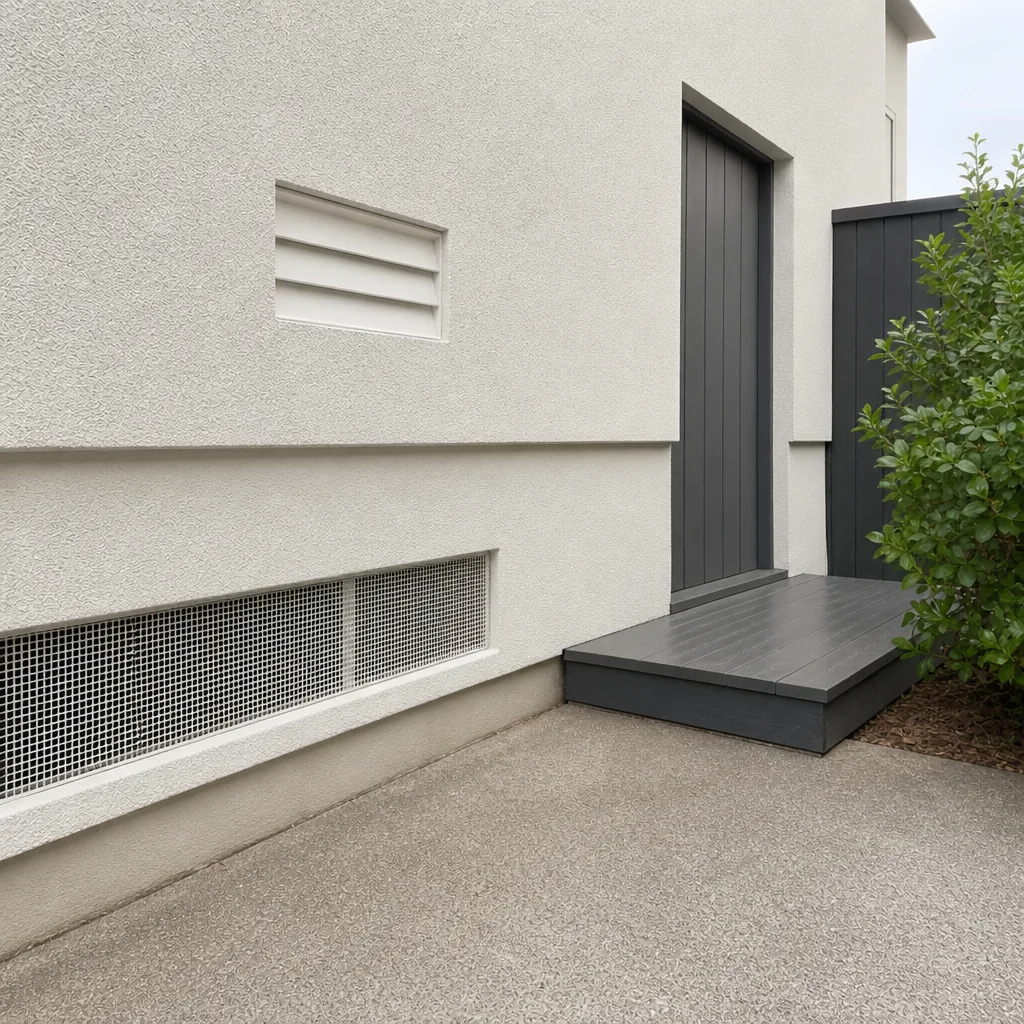
See the difference
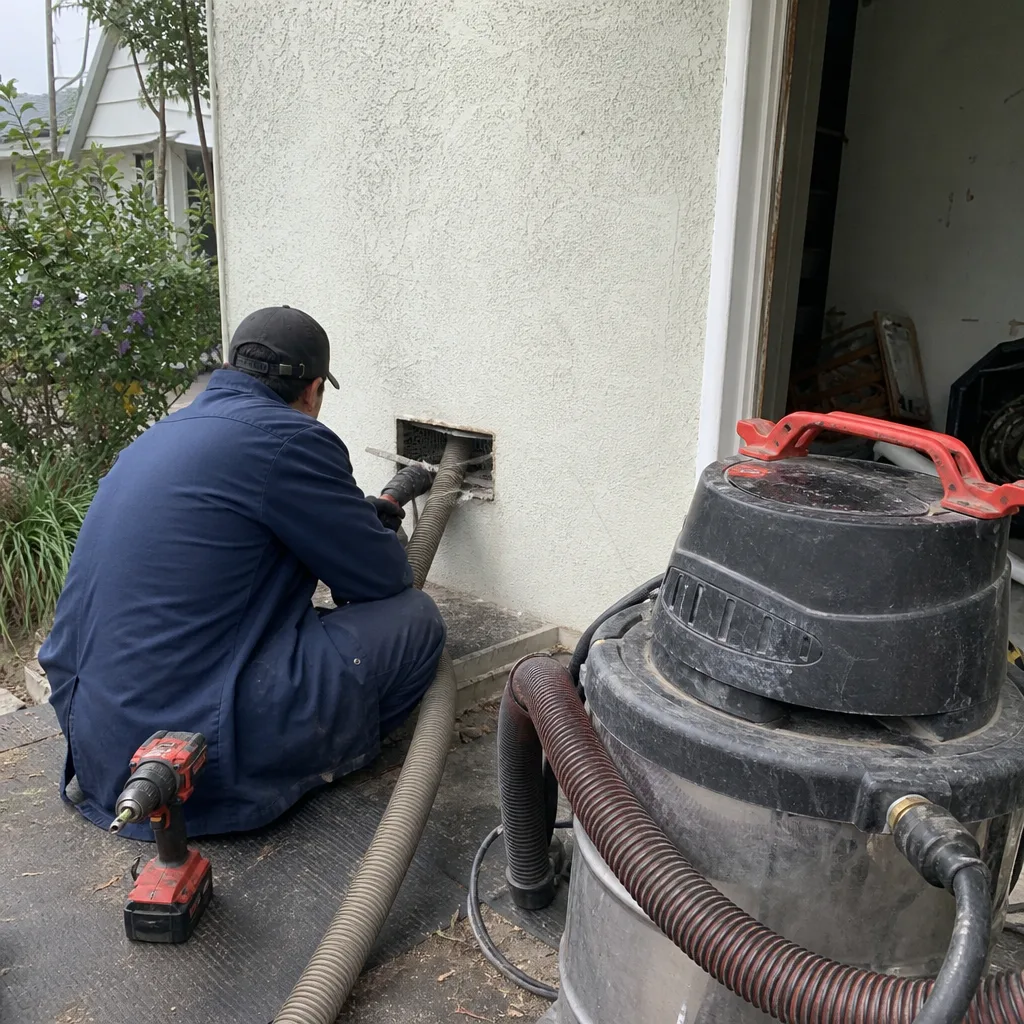 Before
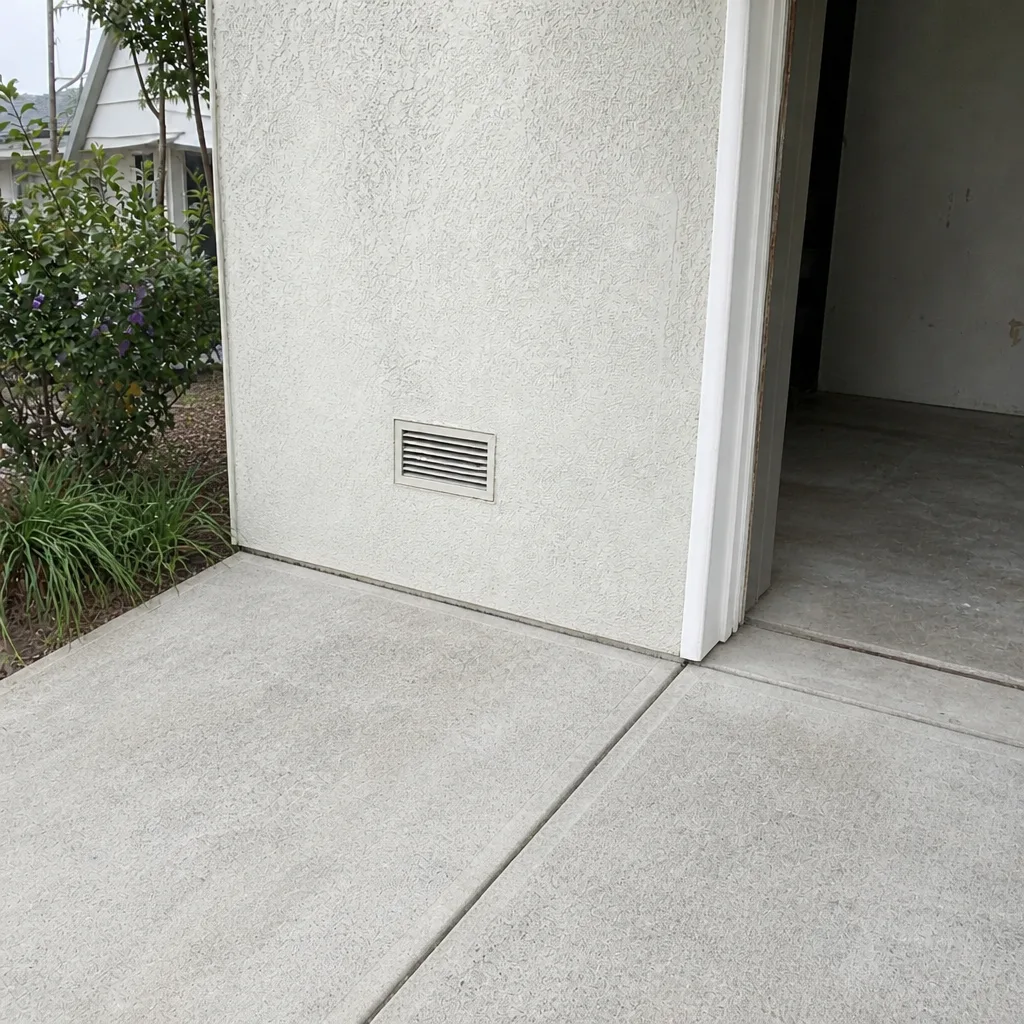 After
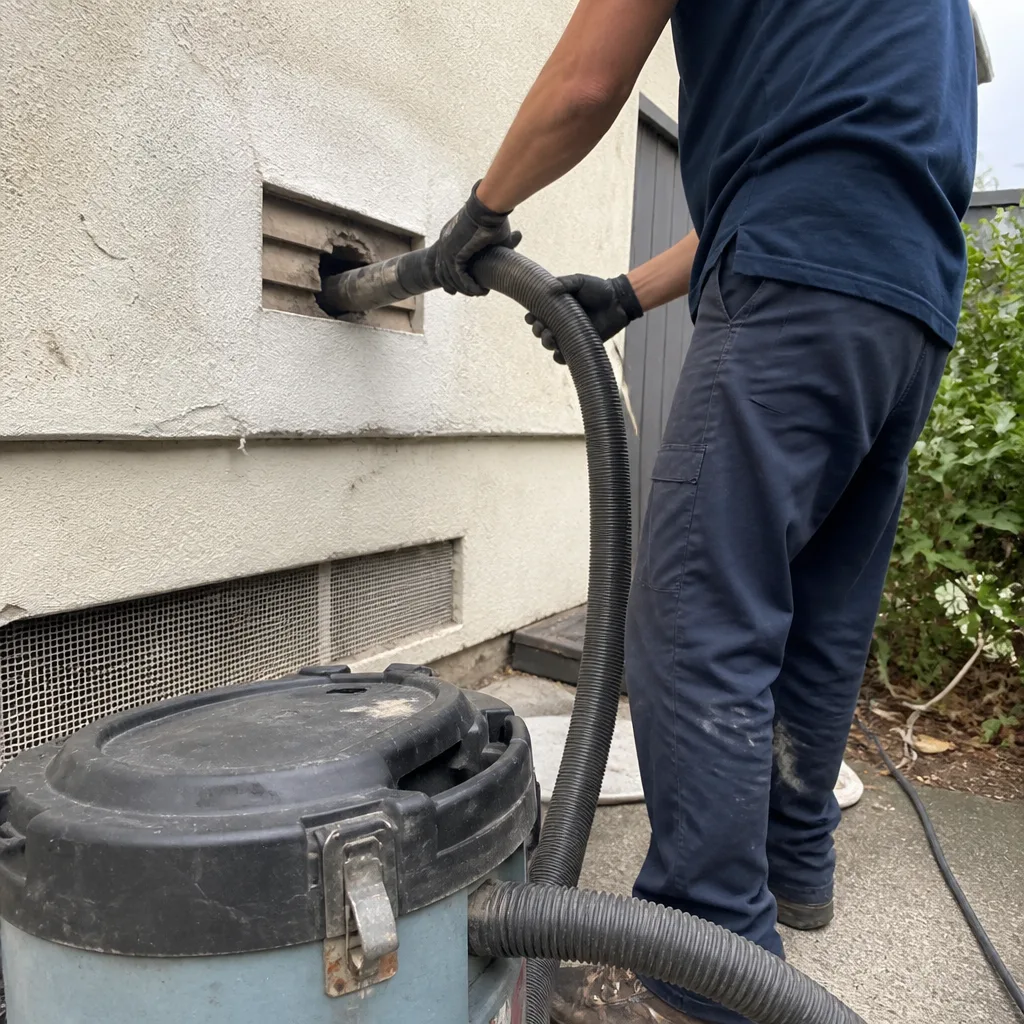 Before
 After
 Before
 After
When to Call a Professional
Some duct issues are DIY-comfortable (checking a filter, opening a register to look inside). Others aren’t. Call a professional when you notice: persistent musty smells that return after cleaning your filter, visible dust blowing out of registers on startup, a recent renovation that left drywall dust inside the HVAC system, allergy symptoms that spike indoors, a dryer that takes much longer than it used to, or a first-time inspection because a home is new to you. HVAC and ductwork also carry electrical and (in some systems) gas hazards, so anything involving the equipment itself belongs to a licensed professional. Duct Cleaning Fairfield offers free estimates in Fairfield. Call (844) 834-3074. We answer 24/7. Fast dispatch from 7am to 7pm, Sunday through Friday.
Frequently Asked Questions
Typical duct cleaning in Fairfield runs in the range you’d see for scheduled whole-house service in this market, and the written estimate sets the final price. We don’t quote per-vent teaser numbers or teaser promotions because they don’t reflect the real job. Call (844) 834-3074 for an exact quote. Estimates are free.
Because they aren’t quotes for the same job. A sub-$100 whole-house offer is a foot-in-the-door price designed to get the technician inside, where the upsells happen. The FTC has documented this exact scheme. A real quote reflects equipment, labor, and scope. Our pricing is one flat price per system, agreed before work starts, and the written estimate sets the final price.
Ask for before-and-after camera photos of your own ducts, written scope completion, and a walkthrough of findings. A contractor who provides all three is documenting the job. One who provides none is asking you to take their word for it. Call (844) 834-3074 for an exact quote. Estimates are free.
No, and it isn’t the most important credential. NADCA membership signals a commitment to the ACR standard. The credential that matters more in California is the C20 HVAC license from the Contractors State License Board, because that license class covers repair and modification work, not just cleaning. Verify both before booking. Call (844) 834-3074 for an exact quote. Estimates are free.
For most Fairfield homes, every few years is a reasonable baseline, and sooner after a renovation, an HVAC replacement, or a move-in. Homes with allergies or pets tend to need it more often. The honest answer is: it depends on the system and the household, and anyone quoting an exact interval without seeing the ducts is guessing. Call (844) 834-3074 for an exact quote. Estimates are free.
Yes. Air duct repair is a standalone service, separate from cleaning. It addresses the structural cause of contamination and energy loss, like disconnected or crushed runs, so the system is clean and connected afterward. A contractor without a C20 license may only be able to clean, not repair. Call (844) 834-3074 for an exact quote. Estimates are free.
The Bottom Line
Hiring a duct cleaner in Fairfield comes down to three checks: equipment, credentials, and quote structure. Verify the vacuum, the brush system, and the containment method before booking. Verify the C20 license and insurance. Request a written estimate with explicit scope. Ask for before-and-after camera photos and a written scope completion at the end. Any contractor who can clear all four questions is worth hiring. Any contractor who dodges one of them is telling you something, and you should listen. The bait-and-switch operators count on you not asking, so ask. We’re accessible at (844) 834-3074 and we answer 24/7. Fast dispatch from 7am to 7pm, Sunday through Friday.
Ready to get a real answer on your ducts? Call (844) 834-3074 for a free estimate. We run professional Rotobrush and Nikro equipment with Abatement Technologies HEPA containment, and we repair what we find. One flat price per system, agreed before work starts, with before-and-after photos of your own ducts and a walkthrough of the findings so you know exactly what you paid for.
Written by the team at Duct Cleaning Fairfield.