
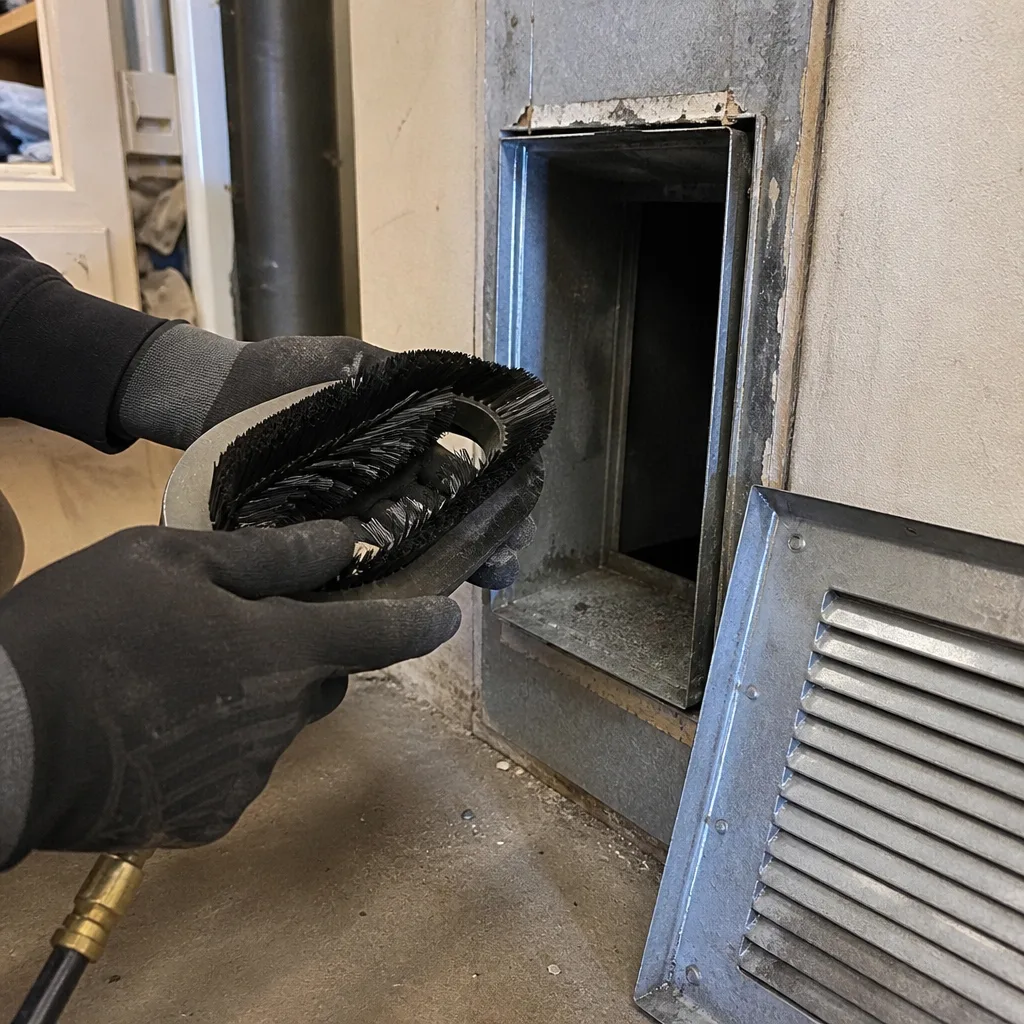
Last updated November 16, 2026
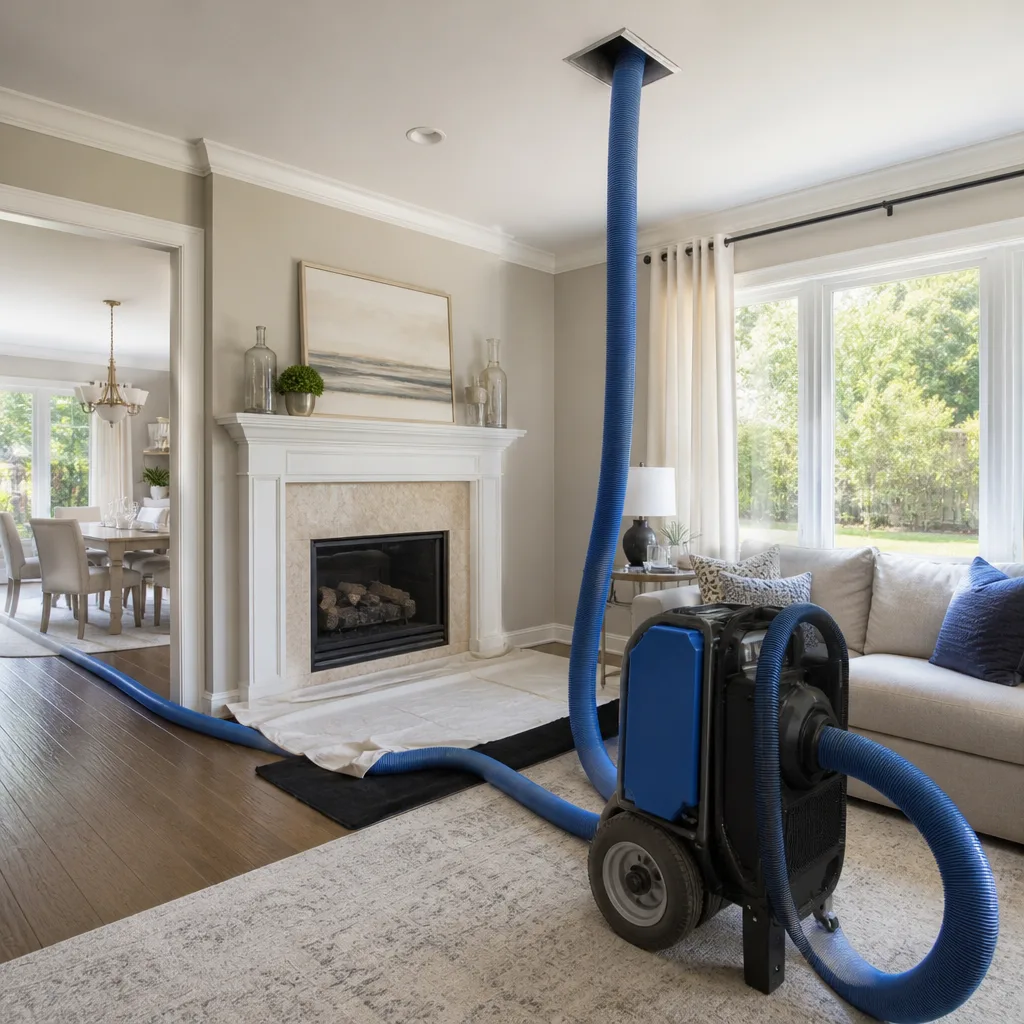 Whole-home duct cleaning
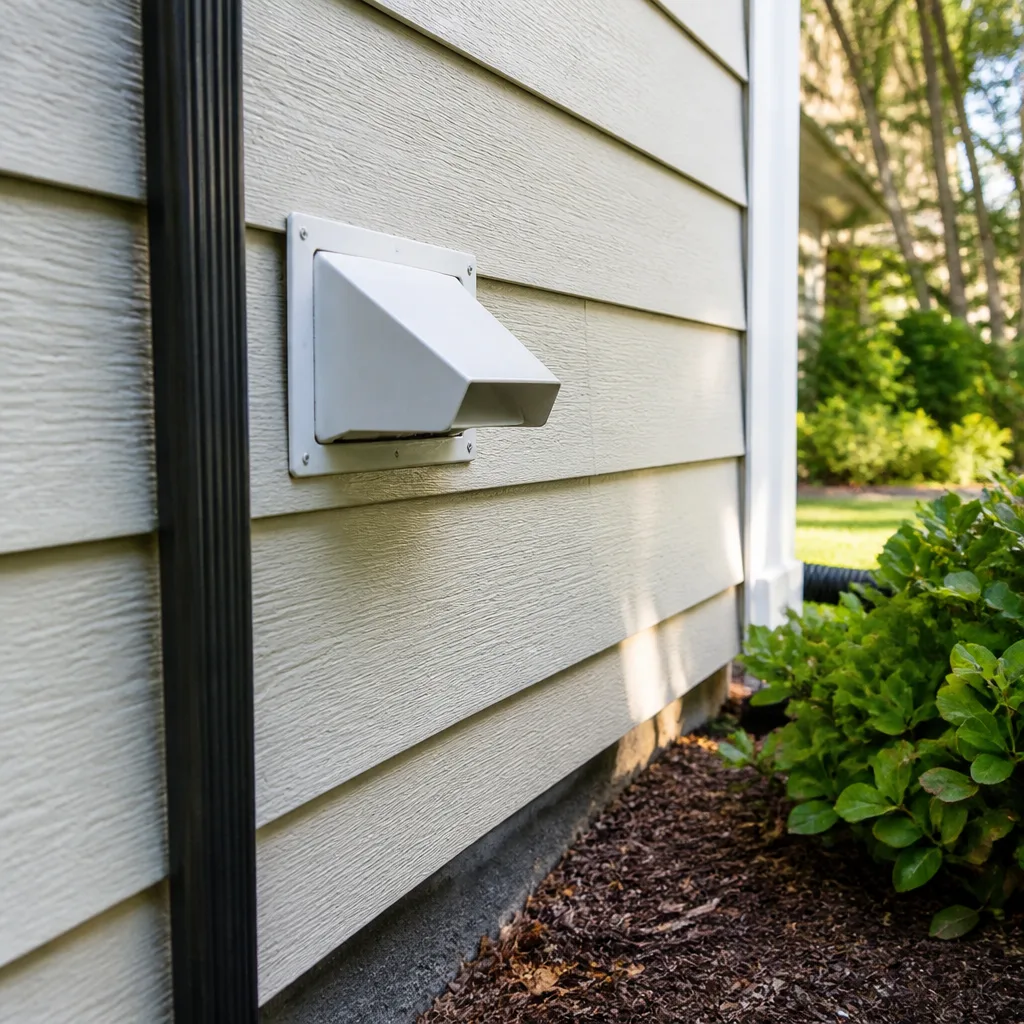 Dryer vent cleaning
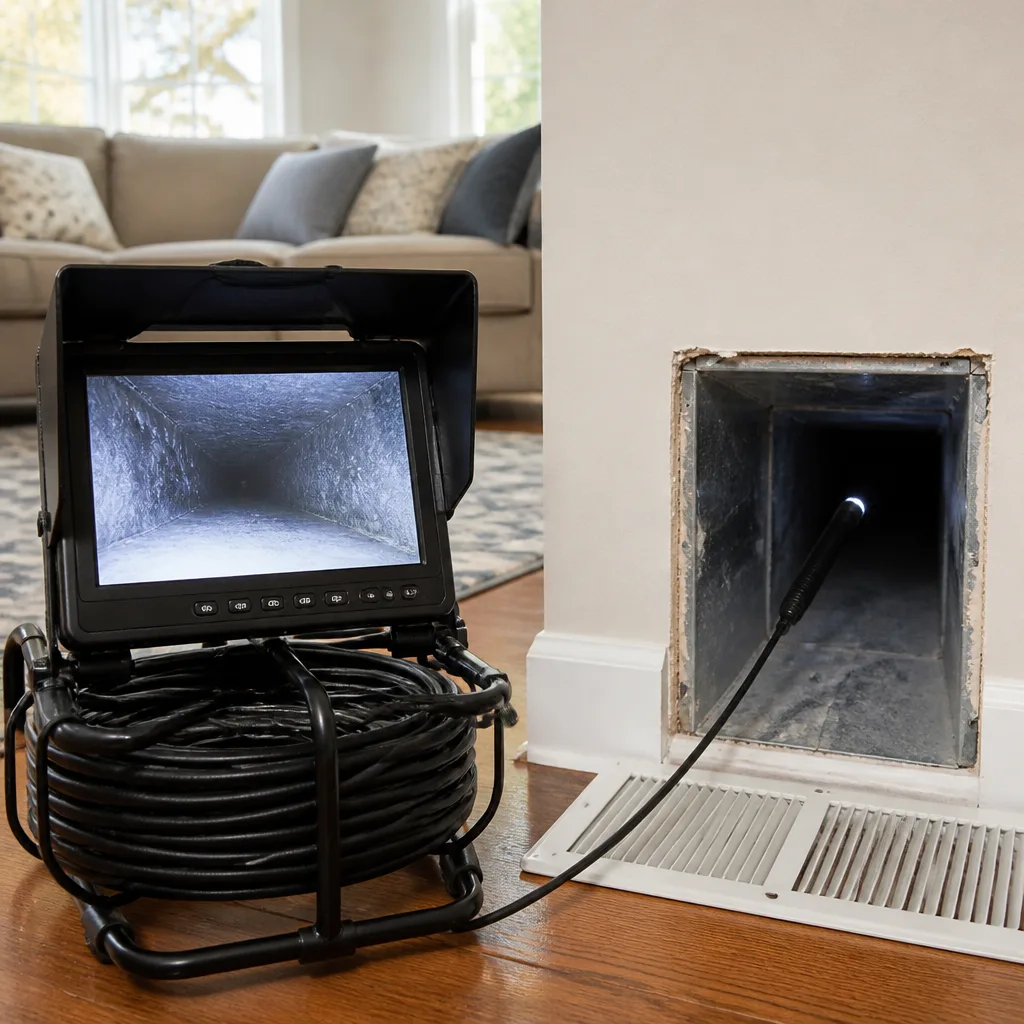 Camera inspection
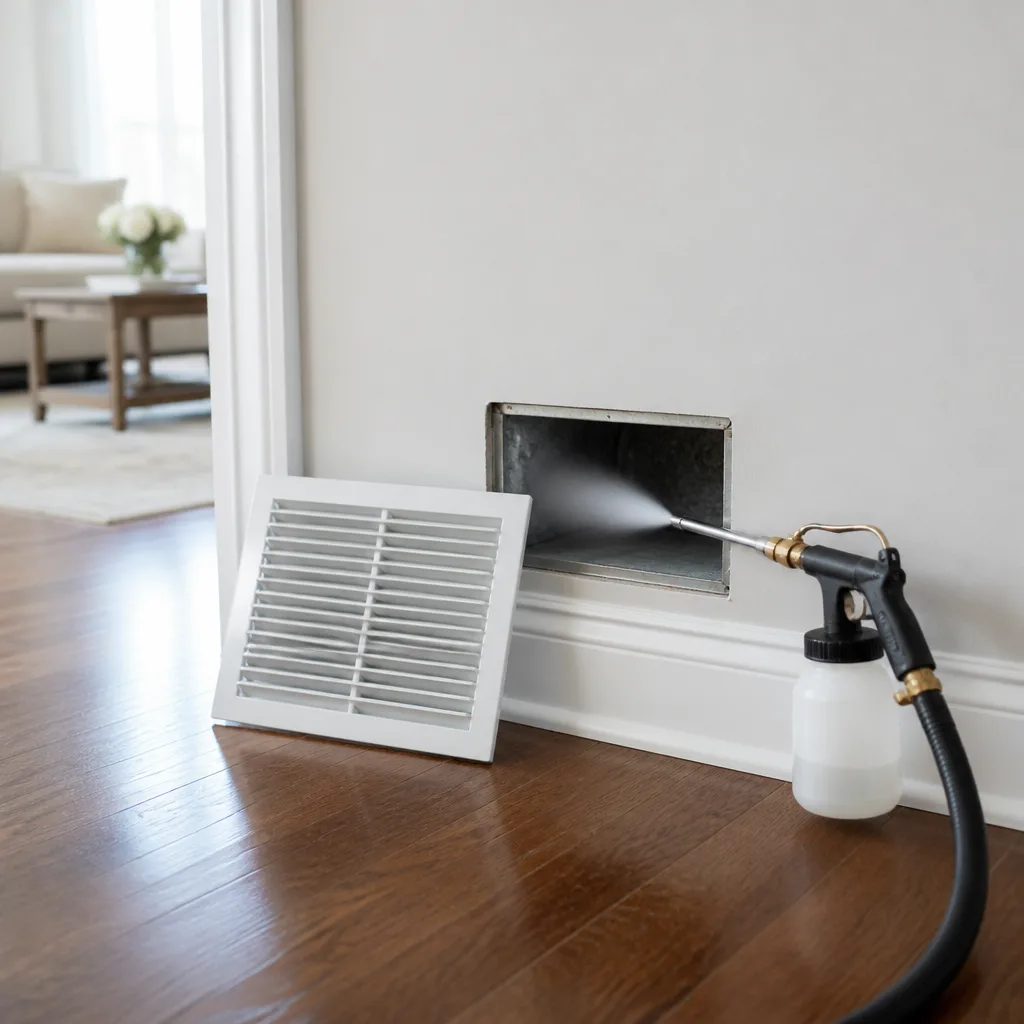 Sanitizing & deodorizing
Whole-system duct and dryer vent check with before-and-after photos - you see exactly what came out of your vents
That "$99 whole-house special" is a bait ad - the real number appears once they are in your hallway, or the "clean" is a shop-vac at the register. We photograph the inside of your ducts before and after instead.
Air Duct Cleaning Warning Signs: A Fairfield Homeowner’s Reference Guide
That musty smell that fades ten or fifteen minutes after the system kicks on usually isn’t your drain pan. It’s organic growth inside the supply ducts, swept out with the first push of air and then diluted by the ongoing cycle. The drain pan issue and the duct issue look similar from the hallway and have completely different fixes, and guessing wrong sends Fairfield homeowners into HVAC service calls that never touch the actual source. This guide teaches you to read the real signals: airflow, odor, visual staining, and health patterns. You’ll learn which signs mean “schedule soon” and which mean “shut the system down,” so you can stop paying to diagnose the wrong thing.
Quick Answer
The most reliable air duct cleaning warning signs are uneven airflow between rooms, a musty or ammonia-like odor that appears when the HVAC starts, dark staining around supply registers, visible debris on return grilles, and allergy symptoms that flare specifically when the system runs. Dark staining and persistent odors point to a source inside the duct runs rather than the HVAC equipment itself. Which of these you’re seeing determines whether the job is scheduled maintenance or a stop-using-the-system-now situation.
Styles & brands we work with
- Whole-home duct cleaning
- Dryer vent cleaning
- Camera inspection
- Sanitizing & deodorizing
Table of Contents
- Airflow Warning Signs: When the Problem Isn’t the Blower
- Odor Diagnostics: Telling Mold, Rodents, and Dirty Sock Apart
- Visual Signals Around Registers and Returns
- Health Signals That Track With Your HVAC Cycle
- Why Fairfield’s Climate and Housing Shape Duct Problems
- Priority Framework: What’s “Schedule Soon” vs. “Don’t Run the System”
- What Proper Duct Cleaning Actually Involves
- When Cleaning Isn’t Enough: Structural Duct Problems
Airflow Warning Signs: When the Problem Isn’t the Blower
Weak airflow in one room gets blamed on the blower motor more often than any other single cause, and it’s usually the wrong diagnosis. A blower that’s failing affects the whole house roughly evenly. Airflow that’s strong at the kitchen register and weak at the far bedroom is telling you something about the duct run to that bedroom, not the motor pushing air into the system. That distinction saves Fairfield homeowners from paying for blower repairs that don’t change anything.
The clearest field test doesn’t require equipment. Hold a tissue or a strip of thin paper against each supply register one at a time and note how far it deflects. You’re looking for variation between rooms, not absolute strength. A register that barely moves the paper while the adjacent one pulls it taut is a run worth investigating. Common culprits inside the run itself:
- Debris accumulation in a long or poorly supported flex run, especially where flex duct sags or kinks.
- Crushed or disconnected duct sections, which send conditioned air into a wall cavity or crawl space instead of the room.
- Leaky joints and seams, letting pressure escape before the air reaches the register.
- Blocked or partially closed damper blades in the branch takeoff, sometimes left half-closed from an old balancing attempt.
- Restricted return path, which starves the whole system and shows up as every register feeling weaker together.
For the technically inclined, a cheap handheld manometer gives you a static pressure reading at the return plenum and at a supply plenum. A large pressure drop across the system points to restriction, and uneven drops between branches point to the specific run. You don’t need to interpret the numbers yourself; what matters is that uneven results tell you the ducting is involved, which changes the conversation when you call for a duct inspection. If nobody has ever put a gauge on the system, an airflow complaint gets diagnosed as a blower problem by default.
Odor Diagnostics: Telling Mold, Rodents, and Dirty Sock Apart
Odors are the most misread warning sign in the duct system, partly because three distinct problems smell vaguely “musty” to an untrained nose. Each one has a fingerprint, and the fingerprint tells you what to check and what a proper fix looks like.
Mold and mildew in the ducts
A damp, earthy, wet-cardboard smell that shows up at the first air push and fades within ten to fifteen minutes is the classic pattern for organic growth inside the supply runs. The fade matters. Growth sits on the duct interior, the first cycle sweeps spores and volatile compounds into the room, and then the steady airflow dilutes what’s left. If that’s your pattern, the drain pan is probably fine. Look at the duct interior and at the areas with the most condensation, usually where ducts pass through unconditioned space.
Rodent intrusion
Ammonia-forward, sharp, and persistent rather than fading. Rodent activity in ducts leaves that smell steady because it comes from waste deposits, not from a growth layer that gets diluted. You may also find droppings near the return, chewed insulation at duct joints, or nesting material near a disconnected run. A persistent ammonia smell is a stop-and-call situation; you don’t want to be circulating air from a contaminated run while you decide what to do about it.
Dirty sock syndrome
This one isn’t primarily a duct problem. It’s biological growth on the evaporator coil, which sits inside the air handler and gets wet with every cycle. The smell arrives when the system starts and often hangs around because the coil stays damp. The fix is coil cleaning plus addressing why the coil stays wet, not duct cleaning alone. If a company shows up and cleans the ducts and the smell stays, this is usually why. For Fairfield homes with high indoor humidity swings, coil condition deserves a look before anyone starts on the ductwork.
Visual Signals Around Registers and Returns
The most overlooked warning signs are the ones you can see without any tools, sitting on the wall and floor of your own home. Walk the house with a flashlight and look at these specifically.
- Dark staining or “tiger striping” around supply registers. That soot-like halo is filter bypass: air slipping around the filter rather than through it, carrying particles that settle on the register face and the surrounding drywall. A properly seated filter and a clean, well-sealed filter frame reduce it. When the staining is heavy, the filter has been bypassing for a while and particles have been reaching the coils and ductwork.
- Visible debris on the return grille face. A dust film on the return is normal between cleanings. Hair, lint, pet fur, and debris packed into the grille louvers is not; that’s a sign the return is doing more filtration duty than it should.
- Insulation particles on furniture near vents. Fiberglass flecks on a bookshelf or table under a supply register suggest the duct liner or the duct exterior wrap is breaking down and shedding. This one warrants a professional look at the duct internals; you don’t want liner material circulating.
- Streaking or dark trails on the ceiling or wall above a register. Sometimes it’s dust carried by air leaking at the boot. Sometimes it’s moisture. Either way, it’s telling you the connection between the duct and the register boot isn’t tight.
- Dust resettling on surfaces faster than usual. Every home has a dust baseline. A noticeable step change in how quickly surfaces gray up, especially after a renovation or a pet addition, points to a source in the air path.
Photograph what you find. Photos give a technician useful information before the visit and let you compare against how things look after. If you’re seeing staining and shedding together, ask about air duct repair as well as cleaning; the structural cause and the contamination often show up on the same walkthrough.
Health Signals That Track With Your HVAC Cycle
Health symptoms aren’t proof of a dirty duct, but the pattern matters more than the symptom. The question to ask yourself is whether symptoms track with the HVAC running. Someone whose congestion is the same whether the system is on or off is probably reacting to something else. Someone who notices sneezing, eye irritation, or a scratchy throat within minutes of the system kicking on, and again a few hours after it stops, has a pattern worth investigating.
Fairfield sits in a zone where spring pollen and late-summer dry conditions both put particulate load on the house. When windows stay closed and the system runs more, indoor particulate concentration rises. That’s normal, and it doesn’t mean the ducts are dirty by itself. But when the system is running and symptoms still spike, a duct assessment is a reasonable next step. What we look for:
- Symptoms that worsen specifically when the HVAC runs and improve when it’s off.
- Symptoms concentrated in the rooms furthest from the air handler, where debris accumulates along the longer runs.
- Recurring respiratory irritation with no outdoor or seasonal explanation.
- Symptoms that appeared or worsened after a renovation, a new pet, or a move into an older home.
- A noticeable “old house” or musty smell whenever the system runs, especially in the first ten minutes.
We’re not medical professionals, and none of this is a diagnosis. What it is: a pattern worth correlating with a duct inspection. When we find debris, liner breakdown, or biological growth, that’s a physical explanation you can act on. Whole-home filtration and humidity control are the next step after cleaning for homes with ongoing sensitivity; platforms like Honeywell and Aprilaire offer filter and humidification upgrades that pair with our work, and we can advise on which makes sense for a given home before any equipment decision is made.
Why Fairfield’s Climate and Housing Shape Duct Problems
Fairfield’s climate is milder than most of the country, which means the HVAC system runs fewer hours per year than in colder or hotter zones. That sounds like a good thing for duct health, and it’s mixed. Fewer running hours means less air movement, and less air movement means moisture that does get into a duct system stays longer. Long, dry stretches also mean the duct liner dries out and cracks rather than staying pliable, and cracked liner sheds.
Housing stock in Fairfield stacks the deck further. A large share of the homes are older: 1950s-70s construction, when ductwork was often wrapped externally, or built as unconditioned attic runs with original flex or sheet metal. Attic ducts see wide temperature swings. That cycling ages the external wrap and the sealant at every joint, and every failed joint becomes an infiltration point. Remodels and additions add their own complication: new ducts spliced into existing runs, sometimes with mismatched sizing or poor transitions.
Neighborhood context matters less than era and construction, but it’s a useful prompt. If you’re in a Cordelia or Green Valley ranch built in the sixties or seventies and nobody has touched the ducts since the original install, a duct assessment in Fairfield tends to find joint sealant failure as much as it finds debris. Newer builds tend to have tighter systems but sometimes undersized returns. Either era is worth a walkthrough once you have any of the warning signs above. The Fairfield service area page covers how we approach local homes if you want the fuller picture.
Priority Framework: What’s “Schedule Soon” vs. “Don’t Run the System”
Not every warning sign is urgent, and treating a routine one like an emergency pushes homeowners into panic decisions. This is the framework we use to triage what a homeowner describes on the phone.
Don’t run the system until it’s assessed
- Persistent ammonia smell. Rodent intrusion contaminating the air path.
- Visible disconnected duct joints or a run that’s clearly blowing into a cavity.
- Liner material shedding into the supply air, or visible insulation fibers on furniture near registers.
- Visible mold growth around registers or on the duct interior, correlated with a damp smell that doesn’t fade.
- Smoke or burning smell of any kind, or electrical arcing sounds. Those aren’t duct calls; shut the system down and get it inspected.
Schedule within the next couple of weeks
- Uneven airflow between rooms that has developed gradually.
- A musty smell that fades after the first cycle and returns every time the system starts.
- Heavy staining around registers with visible debris on returns.
- Allergy symptoms that track with the system running and nothing else changed.
- A renovation completed in the last year without a duct inspection after.
Monitor on a schedule
- Dust resettling at a slightly higher baseline than before.
- Minor streaks near a register that a professional has looked at once.
- A single slightly weaker register in an otherwise even house.
In our experience, the category a homeowner lands in is usually obvious from that list alone. The value of the visit is in confirming what’s causing the symptoms in the category you’re in. When you call Duct Cleaning Fairfield, telling us which category fits your situation lets us ask the right questions before anyone arrives.
What Proper Duct Cleaning Actually Involves
The reason a duct cleaning can miss a warning sign entirely is that the equipment is wrong for the job. A shop-vac rig at the end of a run dislodges some debris and captures some, but it doesn’t create the negative pressure needed to pull debris from the far end of a 30-foot flex run, and it doesn’t contain what it disturbs. A number of homeowners in the market have paid for a cleaning that addressed the symptom in the visible register and left the rest of the system alone.
What professional equipment looks like, and why each part matters:
- Contact-based brushing. A rotating brush system (we run Rotobrush) reaches the duct wall and lifts adhered debris against the air stream. Air agitation alone removes loose debris; brushing removes what’s stuck.
- Full-negative-pressure extraction. High-CFM vacuum equipment (Nikro) pulls the dislodged material out under continuous negative pressure, so it’s headed into the machine rather than into the room.
- HEPA-level containment. Filtration units (Abatement Technologies) capture fine particulate at the machine end. That’s the same containment standard used in remediation work, and it’s why the process doesn’t put a visible cloud of dust into the room.
- Before-and-after photos of your own ducts. A real inspection of the run internals before and after gives you a check on the work that has nothing to do with the technician’s description.
- A path to filtration. If the assessment shows the duct system is carrying more dust than a typical system, upgrading the filter and humidity control through Honeywell or Aprilaire platforms addresses the source going forward, not just the accumulated material.
This is the reason we treat duct cleaning as its own discipline rather than an add-on to an HVAC service call. The air duct cleaning process we run is purpose-built from start to finish, and the equipment list is the reason we can promise containment rather than just offer it. Our technicians have up to 14 years of experience, and the walkthrough starts with a look at the run internals so nobody has to guess whether cleaning is what you need.
When Cleaning Isn’t Enough: Structural Duct Problems
Cleaning a system with leaks is a temporary fix. The new dust finds its way back in through the same infiltrated joints and disconnected runs, and the energy loss continues in the meantime. That’s why we offer air duct repair as a standalone service rather than something we mention after the cleaning is billed. The assessment determines which one the house actually needs.
The repair side addresses the causes of contamination and air loss:
- Reconnecting and resealing disconnected runs, so conditioned air reaches the registers it was designed for.
- Rebuilding failed joints and boots with proper mastic or tape, not a quick wrap that will peel within a season.
- Sizing corrections on returns and branches where a remodel left a transition that starves a room.
- Liner and insulation repair where the internal liner has broken down and is shedding into the air path.
- Filter frame and return design where bypass is the reason the system keeps pulling unfiltered air.
If you suspect a running trap or a condensate line issue in the air handler as well, mention it when you call. It’s the sort of thing that gets picked up on the same walkthrough. For homes with a dryer in a tight or interior closet, a dryer vent cleaning is a separate but related piece of the indoor-air picture, and it’s a fire-prevention measure worth keeping on schedule.
Common Mistakes to Avoid
- Assuming a musty smell that fades is a drain pan problem. The fading pattern points to the ducts, not the pan. Ask for a duct inspection before authorizing HVAC service.
- Authorizing blower repairs on an uneven-airflow complaint. Uneven airflow is a ducting signal. A blower problem affects the whole house evenly, and replacing it doesn’t fix a restricted run.
- Treating a persistent ammonia smell as a duct smell to be cleaned out. That pattern is consistent with rodent intrusion. Stop running the system and get it assessed.
- Hiring on price alone. A quote far below the market usually reflects undersized equipment. Without contact-based brushing and HEPA containment, the job dislodges debris rather than removing it, and the warning sign returns.
- Cleaning without sealing. A cleaning on a duct system with failed joints and a filter frame that bypasses will be repeated sooner than if the structural fixes were made first.
- Ignoring a renovation. Drywall dust and construction debris settle into the ducts and get pulled through the air handler. A duct assessment belongs on the post-renovation checklist.
- Skipping the dryer vent. It’s a listed fire-prevention service for a reason. Full of lint, the vent is a fire risk regardless of how clean the supply ducts are.
See the difference
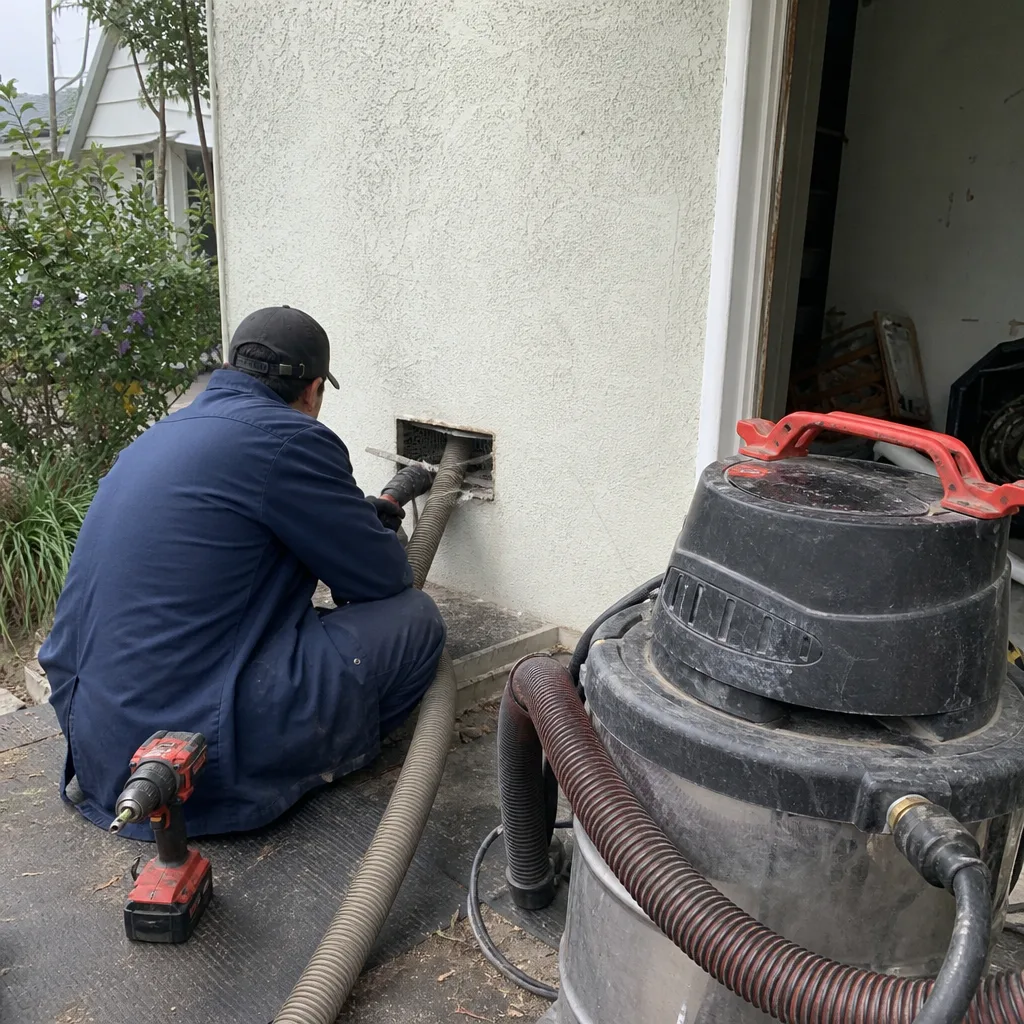 Before
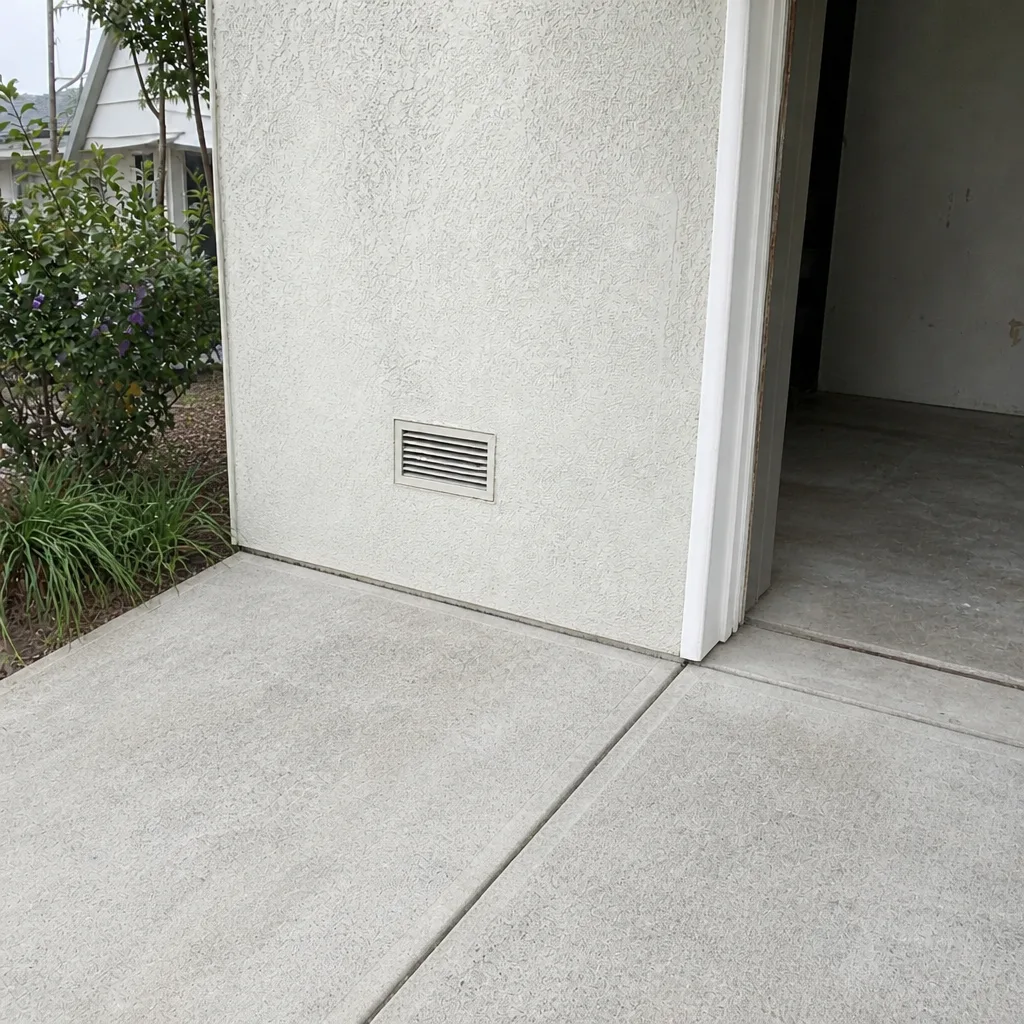 After
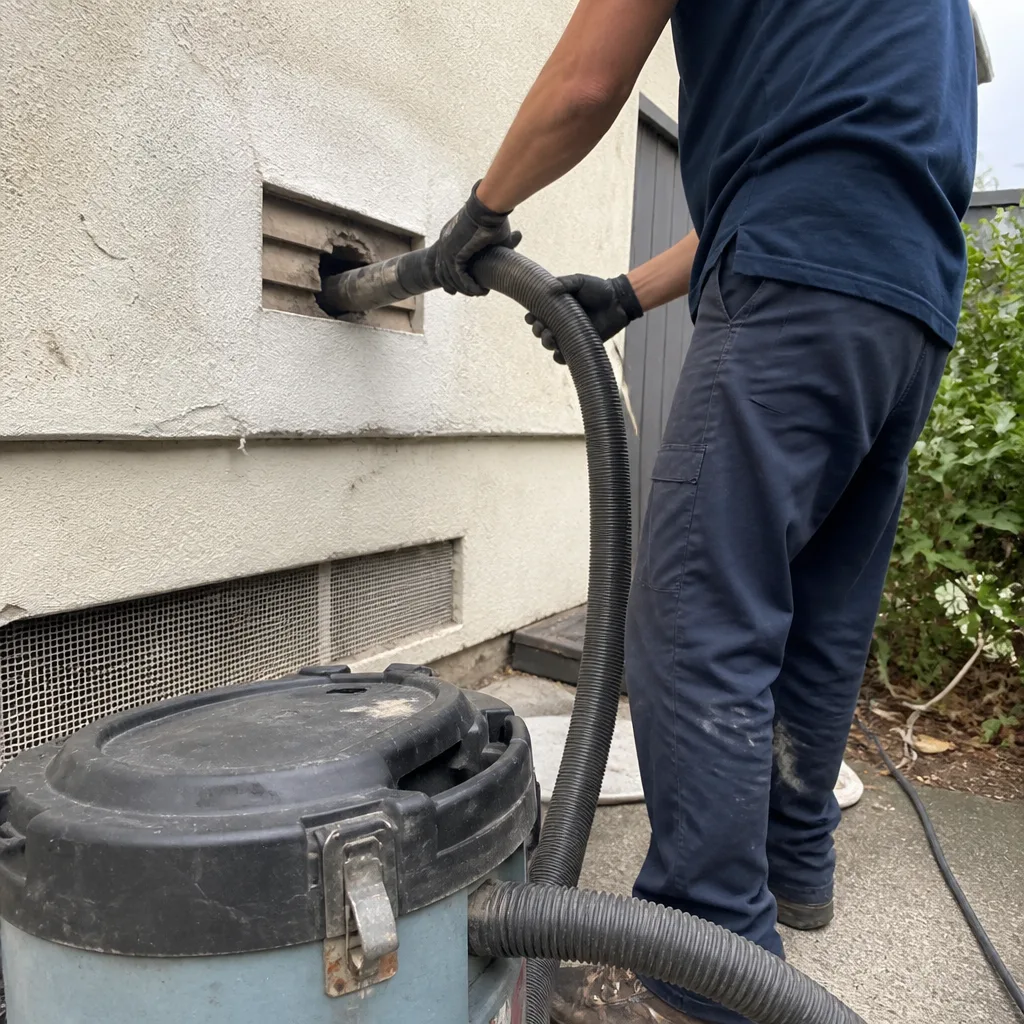 Before
 After
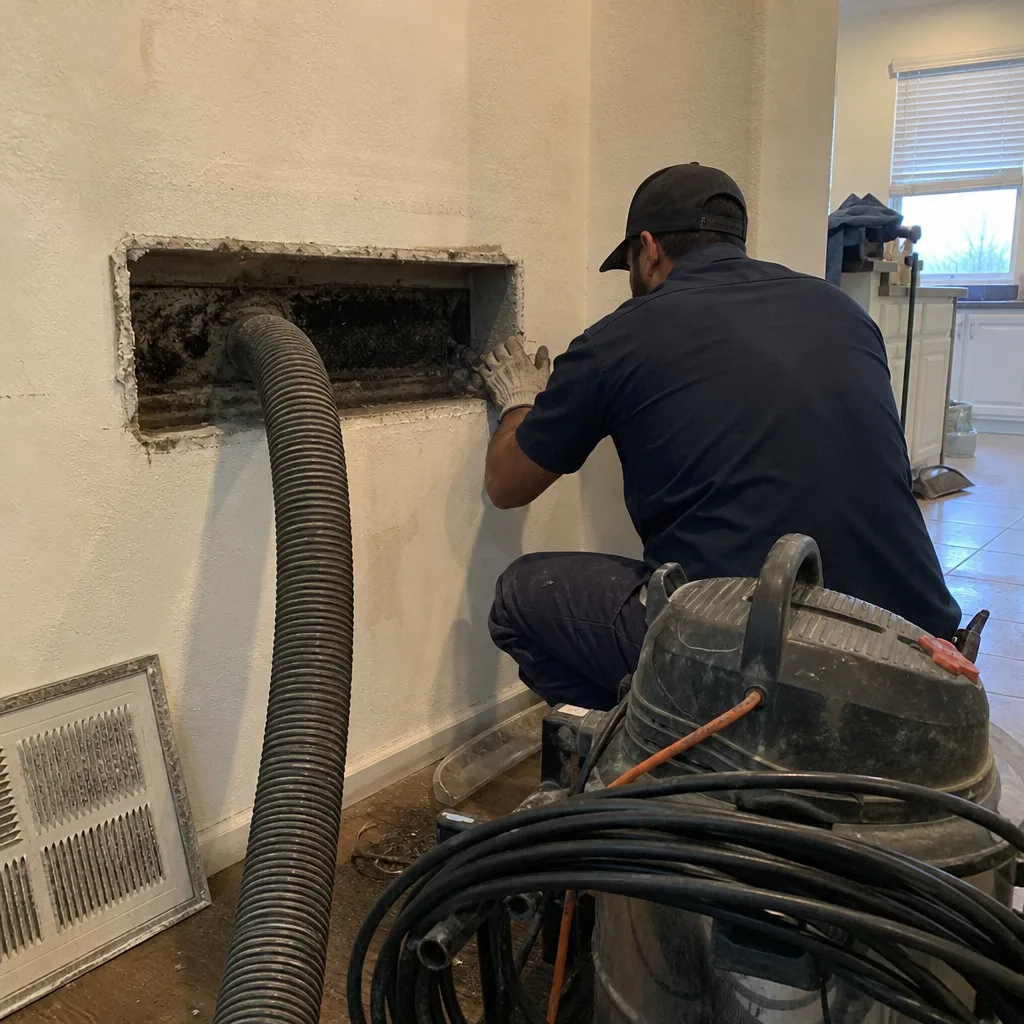 Before
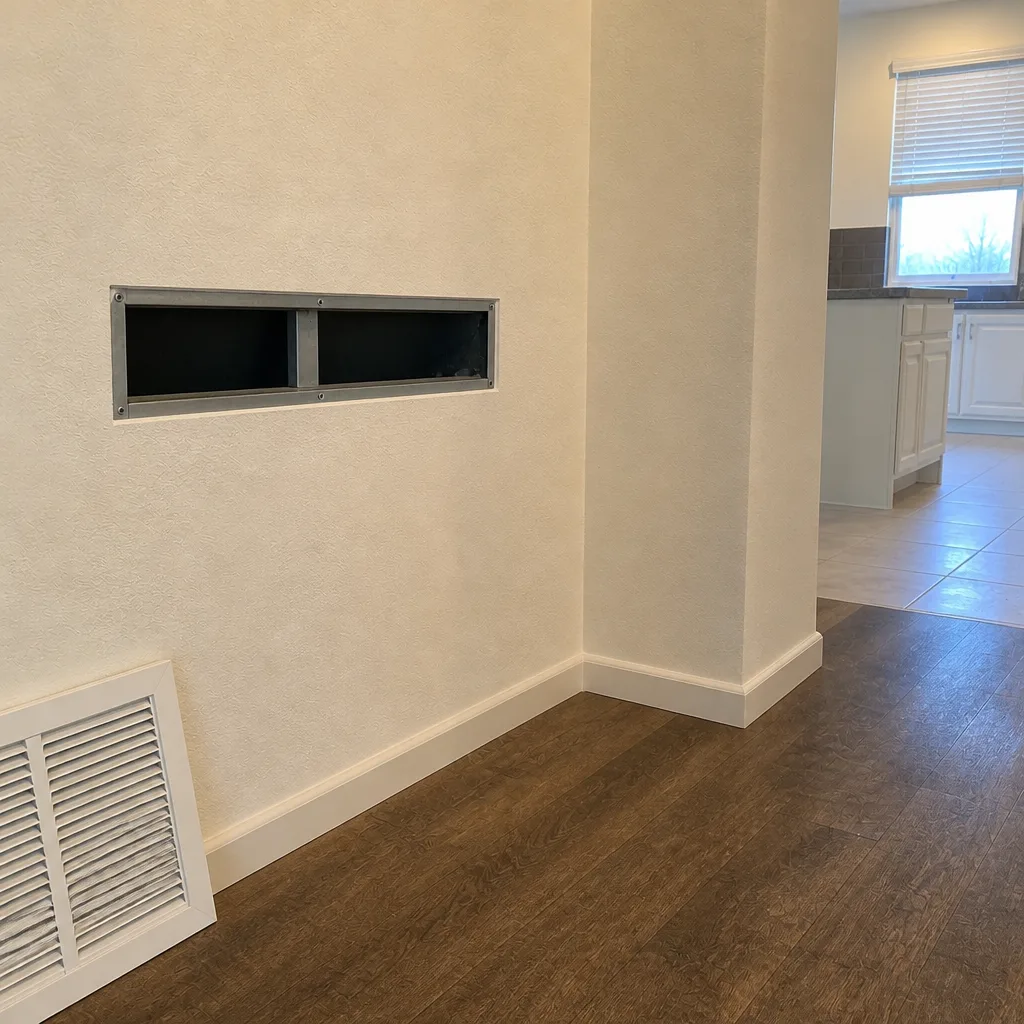 After
When to Call a Professional
Call when you can’t resolve the category on your own. The signals that warrant a professional assessment in Fairfield are a musty or ammonia smell that appears with the HVAC cycle, uneven airflow that has gotten worse, dark staining around more than one register, liner particles on furniture near a vent, or allergy-type symptoms that track with the system running. Those five cover the signs that cleaning alone won’t fix without understanding the cause first. A walkthrough with the right equipment tells you whether the fix is cleaning, repair, or air quality upgrades, and it’s usually obvious from the first pass on the run internals. Duct Cleaning Fairfield offers free estimates in Fairfield; call (844) 834-3074. We answer 24/7. Fast dispatch from 7am to 7pm, Sunday through Friday.
Frequently Asked Questions
The pattern of symptoms tells you. An HVAC equipment problem affects the whole house roughly evenly, while a duct problem tends to be uneven between rooms, tied to a specific run, and accompanied by odor or staining at the registers. If a strong register and a weak register sit on the same system, the ducting is the more likely cause. The exception is a restricted return, which weakens every register at once; a static pressure reading at the return plenum quickly separates that from a blower fault. If you can’t tell from the symptoms, a duct assessment answers it. Call (844) 834-3074 for an exact quote; estimates are free.
Because the source is inside the supply ducts and the smell is diluted by the ongoing air cycle. Organic growth sits on the duct wall and releases compounds into the first air push; after that, the concentration in the room drops. A drain pan issue behaves differently: it’s persistent because the moisture source keeps generating. The fade pattern is one of the most reliable duct-specific signals we see. A walkthrough for contaminated supply ducts is the next step, and it’s a scheduled visit, not an emergency. Call (844) 834-3074 to book it.
Ammonia-forward and persistent is the rodent pattern, and it’s worth acting on as though it is. Ammonia leaves waste deposits, so the smell stays steady rather than fading with the first cycle. Also look for droppings near the return, chewed insulation, or a duct run that seems loose from its support. Shut the system down and get it assessed before running it again. A cleaning plus a repair for whatever opening the rodents used is the fix. Call (844) 834-3074 and we’ll talk through what you’re seeing.
Whole-system duct cleaning in this market typically runs in the range you’d expect for a professional, equipment-backed service, and the written estimate sets the final price. It’s a per-system price, not a per-vent price, and it’s agreed before work starts. Quotes that land suspiciously low for a full house usually reflect undersized equipment, which is why the debris doesn’t come out. Our written estimate is free, and it specifies what the cleaning covers and what professional equipment will be used. Call (844) 834-3074 for an exact quote; estimates are free.
Because the equipment is different. A low quote often reflects a portable vacuum rig with air-whip agitation, which dislodges some debris and captures less of it. A professional job uses contact-based brushing plus full negative pressure and HEPA containment, which is a bigger setup and takes longer. The lower quote also tends to mean no before-and-after photos of the run internals. Ask any company what equipment they use and whether they’ll document the run internals before and after the visit. If the answer is vague, that’s your answer. Call (844) 834-3074 if you’d like a comparison estimate; it’s free.
Most homes don’t have a fixed interval; the need follows the warning signs, not a calendar. A recent renovation, a new pet, a move into an older home, or a run of the symptoms in this guide are the usual triggers. Homes with ongoing allergy sensitivity or an older duct system with unsealed joints benefit from an assessment every few years. If the last cleaning didn’t produce before-and-after photos of your own ducts, you don’t have a baseline, and the next step is establishing one. Call (844) 834-3074 to schedule with us.
Dirty sock syndrome is growth on the evaporator coil, inside the air handler, not inside the duct runs. Cleaning the ducts alone won’t fix it because the wet surface the growth lives on is untouched. The fix is coil cleaning plus addressing why the coil stays wet. On a Fairfield system that cycles on and off through a dry summer with occasional humid stretches, coil condensation is normal, and a coil that never dries is where the problems concentrate. Ask for the coil to be checked on the same visit, especially if the smell returns soon after a cleaning. Call (844) 834-3074 and mention the coil when you book.
The Bottom Line
The signal that matters is the pattern, not the individual symptom. Uneven airflow is a duct signal, not a blower one. A musty smell that fades with the first cycle points to the supply runs, not the drain pan. An ammonia smell that persists is a stop-and-call situation. Those readings alone separate a routine scheduled job from a professional inspection you shouldn’t put off. Clean ducts are the foundation of healthy indoor air, and the equipment behind the cleaning determines whether the warning sign returns. We repair what we find, not just clean over it, and we do it with the right tools. If you’ve walked the house and recognized your own situation on this page, the next step is a conversation. Call (844) 834-3074 for a free estimate. We answer 24/7. Fast dispatch from 7am to 7pm, Sunday through Friday.
Written by the team at Duct Cleaning Fairfield.