
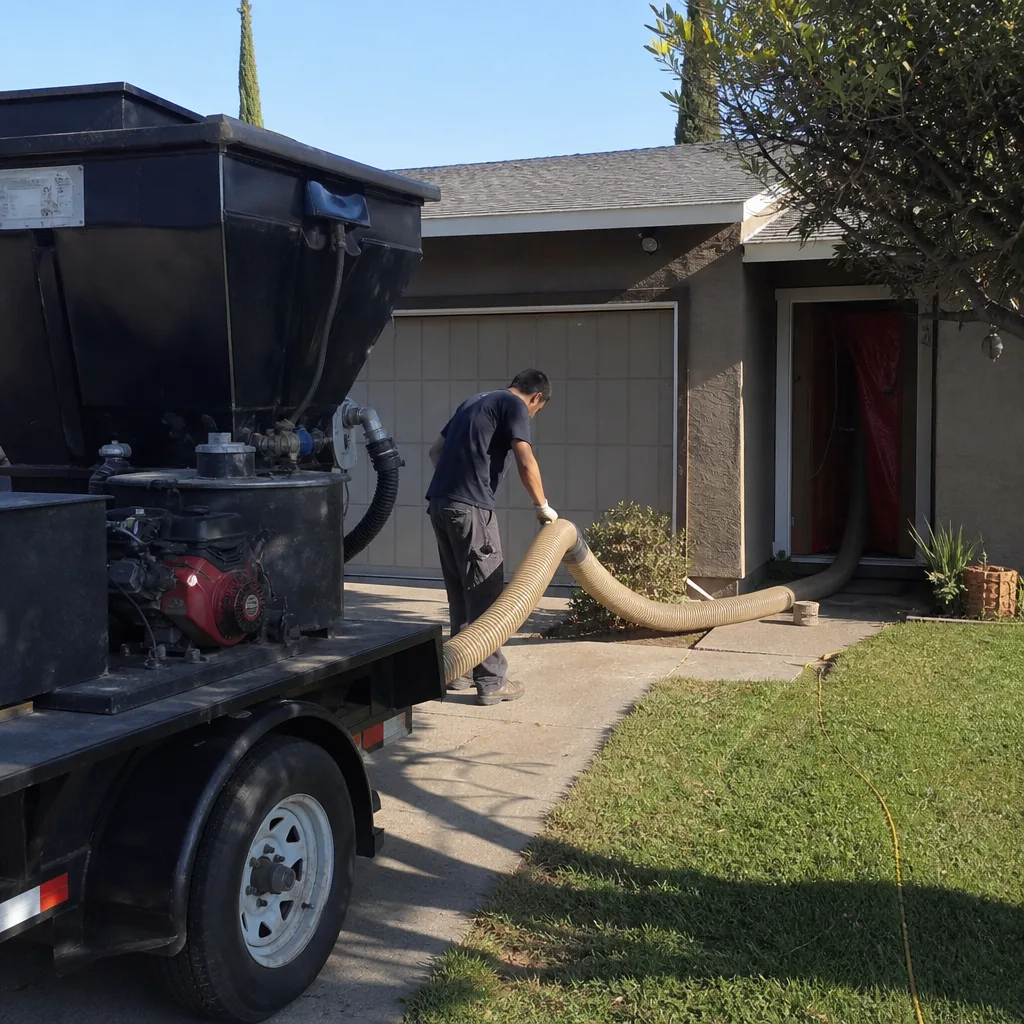
Last updated November 16, 2026
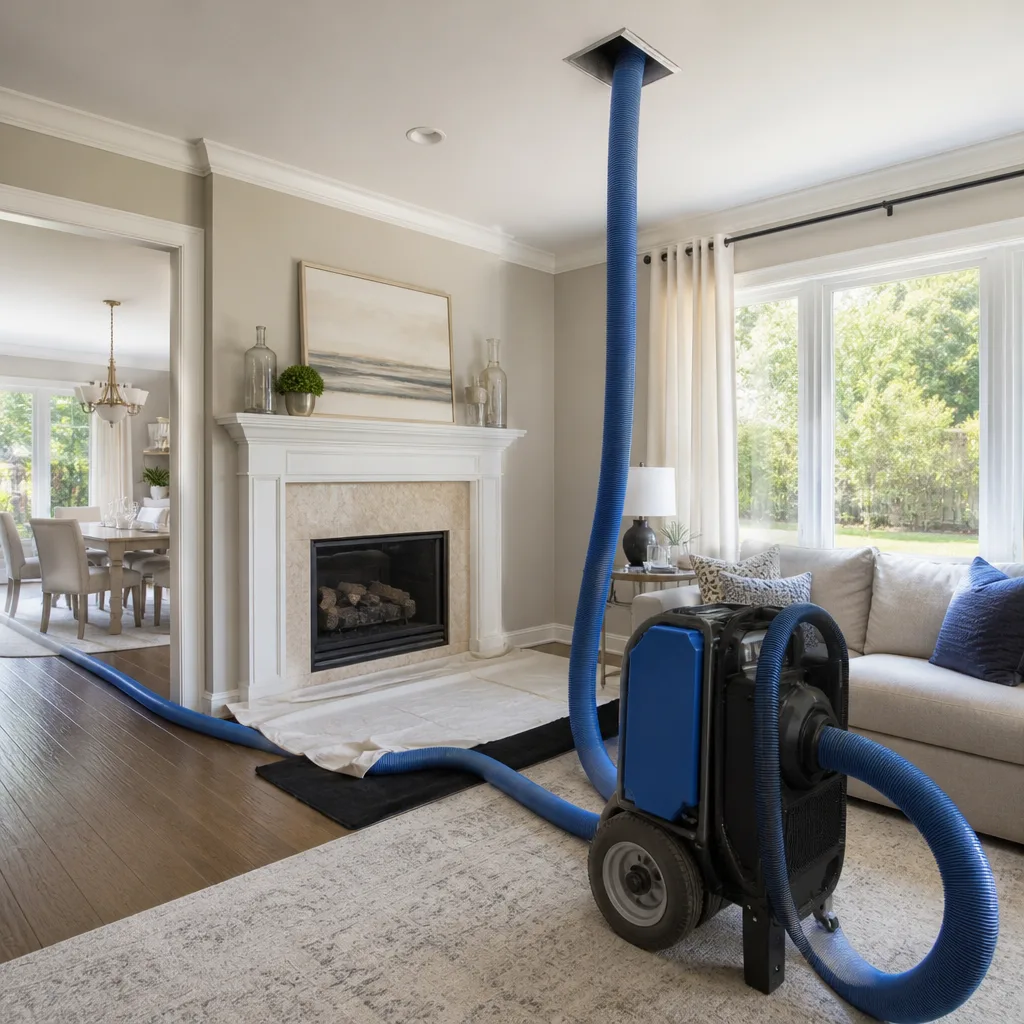 Whole-home duct cleaning
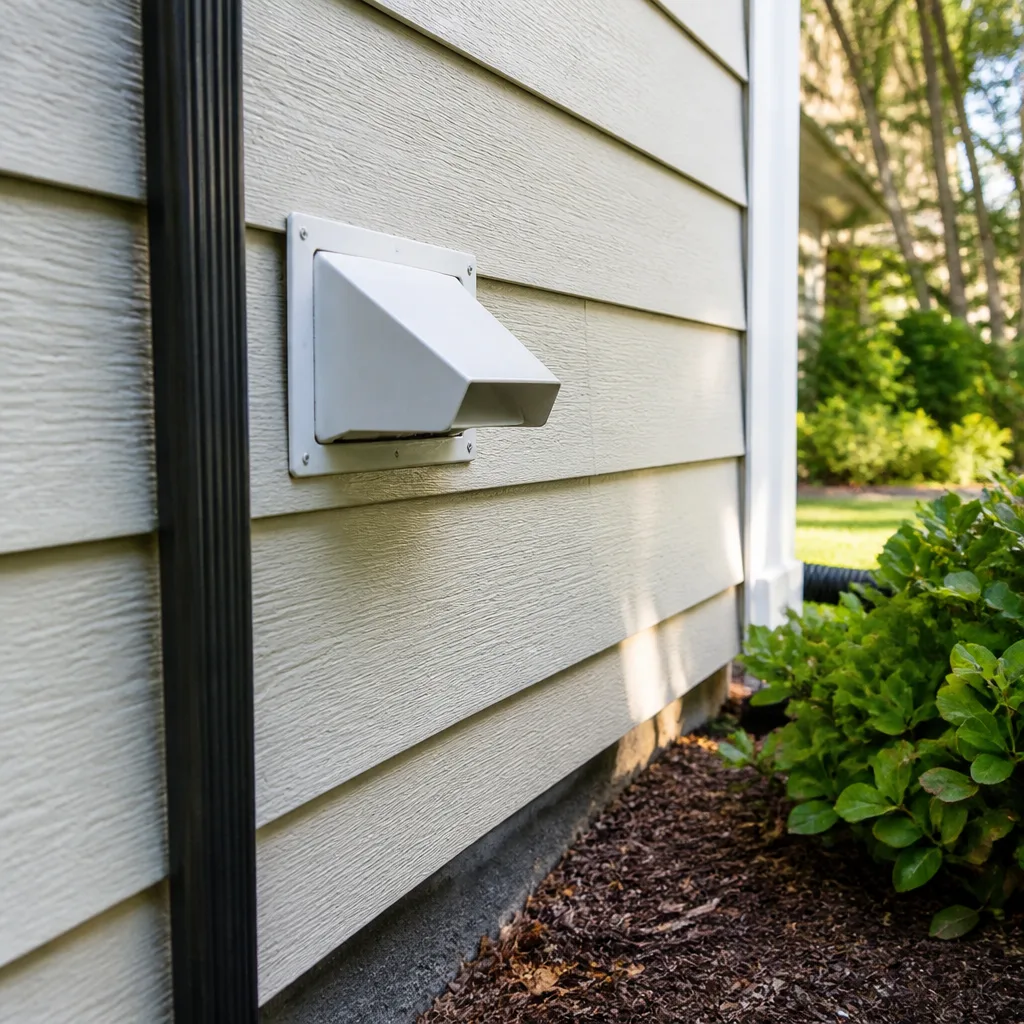 Dryer vent cleaning
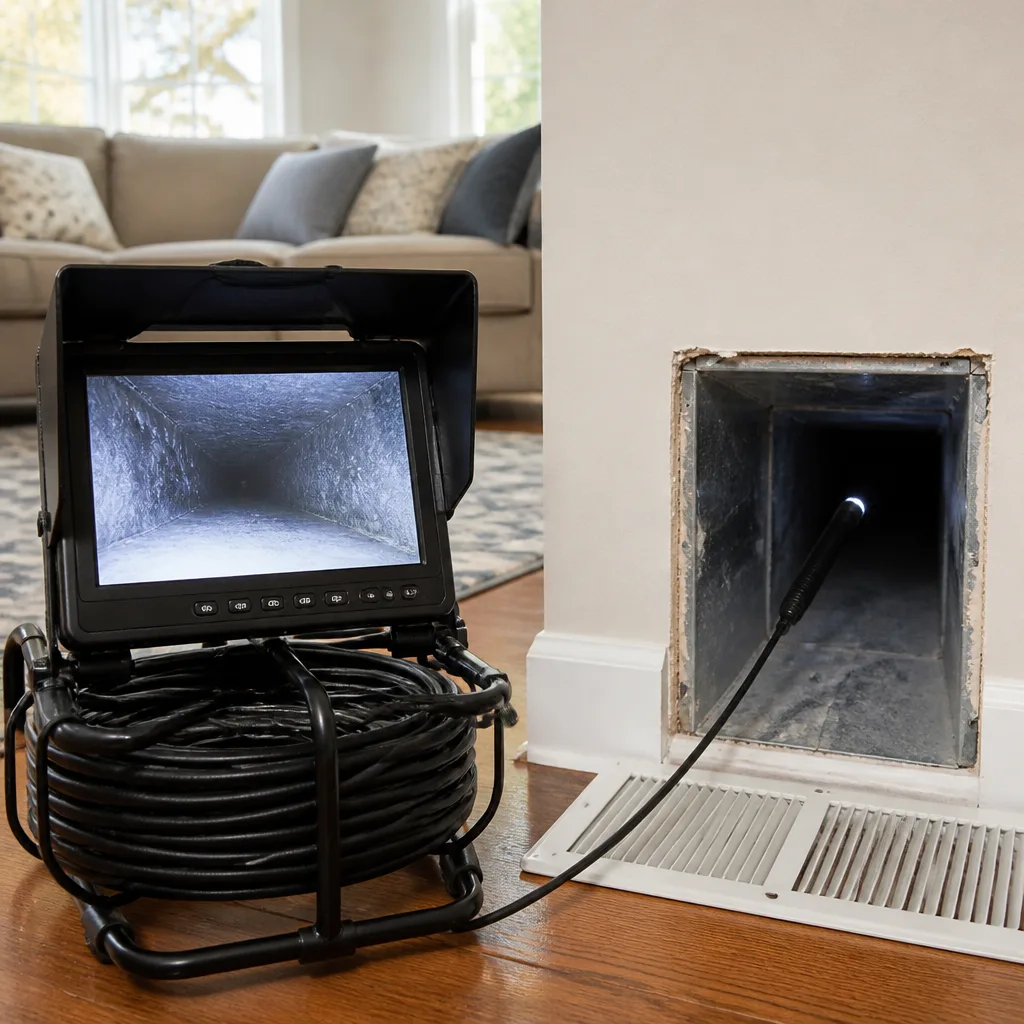 Camera inspection
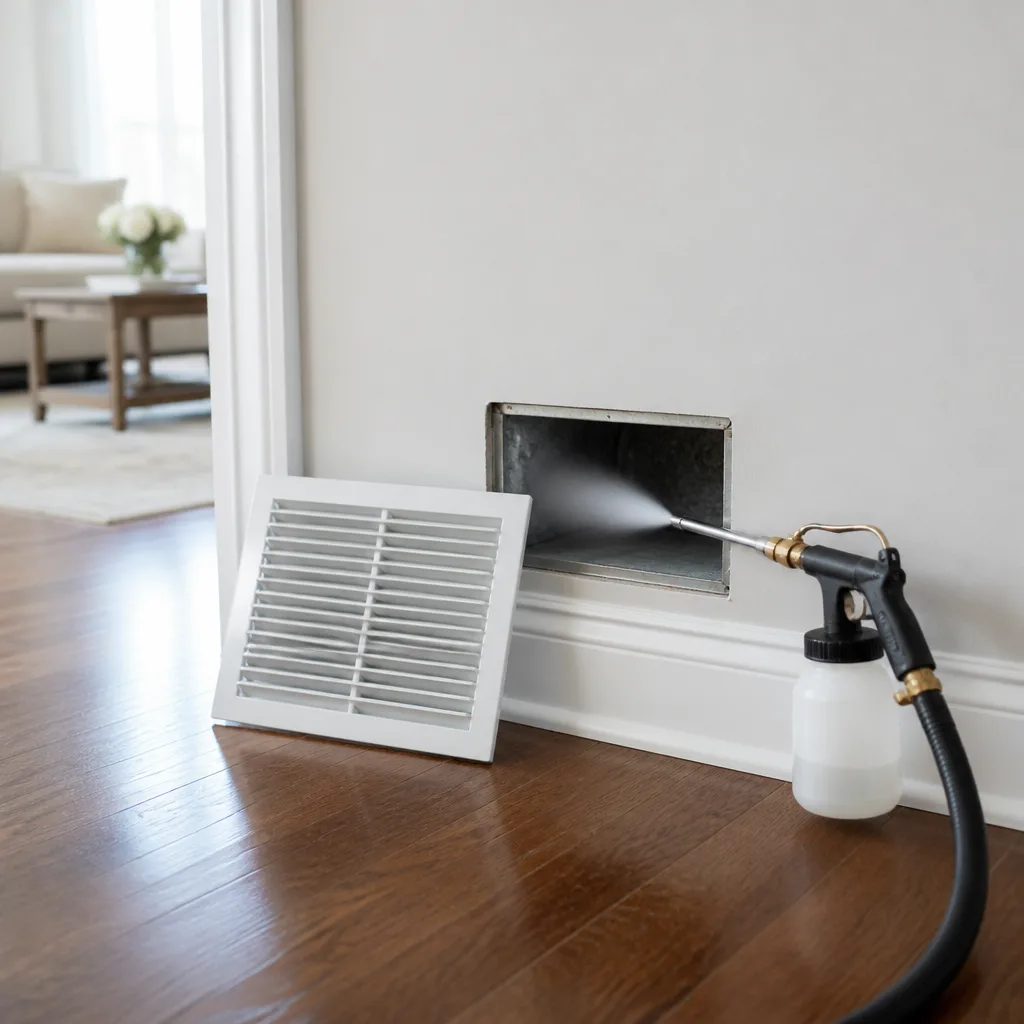 Sanitizing & deodorizing
Whole-system duct and dryer vent check with before-and-after photos - you see exactly what came out of your vents
That "$99 whole-house special" is a bait ad - the real number appears once they are in your hallway, or the "clean" is a shop-vac at the register. We photograph the inside of your ducts before and after instead.
Air Duct Cleaning Troubleshooting in Fairfield: Common Problems and How to Fix Them
If a duct cleaning fixed your smell for three weeks and then the smell came back, the job wasn’t finished. It was paused. That’s the most common thing we hear from homeowners in Fairfield who’ve already paid once and are trying to figure out why their “clean” ducts still misbehave. Most duct problems aren’t mysterious. Weak airflow in one room, a musty odor from a register, dust that reappears within a week, white powder on the ceiling grille: each symptom points to a specific mechanical cause inside the system. Read the symptom correctly and you know where to look. This guide teaches you to do that, maps Fairfield’s particular conditions to the failures they cause, and gives you the checklist to run before you authorize anyone to charge you twice for the same work.
Quick Answer
Most post-cleaning duct problems in Fairfield trace back to three things: incomplete coverage of the trunk lines and return plenum, buildup at the evaporator coil that cleaning never touched, or loose and unsealed duct joints that recontaminate the system within weeks. A trustworthy re-clean starts with a visual scope inspection and a pressure check, not a coupon. If a technician can’t tell you what they found and where, the work hasn’t been done to standard.
Styles & brands we work with
- Whole-home duct cleaning
- Dryer vent cleaning
- Camera inspection
- Sanitizing & deodorizing
Table of Contents
- The Fairfield Duct Symptom Map: Reading Your System Like a Technician
- Musty Odor After Cleaning: Where It Comes From and Why It Returns
- Weak Airflow After a Cleaning: The Blower and Return Plenum Problem
- White Dust on the Registers: It Isn’t Always Drywall
- What a Scope Inspection and Pressure Test Actually Show
- Why Equipment Choice Determines Whether a Cleaning Holds
- The Pre-Re-Clean Checklist: What to Ask Before You Authorize Work
- When the Problem Is Structural, Not Just Dirt
The Fairfield Duct Symptom Map: Reading Your System Like a Technician
Every symptom has a signature. When we walk into a home in Fairfield, the first thing we do is listen to what the system is already telling us through its symptoms. That separates a diagnostic approach from a sales pitch.
Symptom-to-Cause Map
- Musty, wet-earth odor: Almost always points to biological growth at the evaporator coil, in the drain pan, or in a section of duct that stays damp. It is not a “dust” problem, and cleaning the ductwork alone won’t fix it.
- Dry, dusty, powdery odor: Suggests the trunk lines and branch ducts are holding accumulated particulate that never got extracted. The system is distributing what’s still sitting in the pipes.
- No improvement at all after cleaning: Tells you the cleaning reached the registers but not the plenum, the blower compartment, or the trunk lines. The parts you can see were addressed; the parts that matter weren’t.
- Smell that fades for weeks then returns: The source wasn’t removed. It was disturbed. Any cleaning method that dislodges debris without capturing and extracting it simply spreads the material into the airstream, which is why it settles back on the same surfaces within a few weeks.
- Uneven temperatures between rooms: Often mistaken for a duct cleaning issue but frequently a damper, leak, or sizing problem in the duct itself.
Fairfield’s mild climate matters here. Because our summers are warm and our winters are cool rather than cold, heating and cooling systems in Fairfield often run longer seasons in cooling mode, which means more condensate on the coil and more hours of airflow through the ducts. That extended cooling cycle is exactly the environment where a wet coil plus a dusty duct creates odor problems other climates don’t see as often. When a Fairfield homeowner tells us their smell is worse in the warmer months, that’s a strong signal pointing at the coil and drain pan, not at the ducts alone.
The takeaway: read the smell. If it’s wet, look behind the register. If it’s dry, look at the trunk lines. If it’s none-of-the-above, look at the coil. Duct Cleaning Fairfield builds every diagnostic around this map, and it’s the fastest way for a homeowner to know whether the next contractor is actually diagnosing or guessing.
Musty Odor After Cleaning: Where It Comes From and Why It Returns
A musty odor after a duct cleaning almost never means the cleaning failed. It means the cleaning wasn’t the whole job. Ducts are the circulation, but the source is usually the evaporator coil, the condensate pan, or a section of return plenum that stayed damp after the rest of the system dried out.
The Three Places Musty Odor Hides
- The evaporator coil. The A-frame coil sits inside the air handler and is the wettest part of the system in any Fairfield home during cooling season. Dust that settles on a wet coil becomes a food source. If the coil isn’t cleaned as part of the service, the ductwork downstream will recontaminate within weeks.
- The condensate pan and drain line. A slow drain keeps standing water under the coil. That pan is a breeding ground, and it’s frequently skipped because it’s awkward to reach.
- The return plenum. This is the duct section between the return grille and the air handler. Many “duct cleanings” run a brush down the supply branches and stop at the plenum because it’s tight, sealed, and time-consuming. If the plenum is dirty, you’ve filtered air coming into the system through a dirty sock.
Why does musty odor come back? Because the recovery time from a partial clean is predictable. The coil keeps the air wet. The wet air keeps the residual biological material alive. The system redistributes it in a couple of weeks. Homeowners notice the odor return and conclude “cleaning doesn’t work.” The honest answer is that the coil and plenum were never addressed.
What Fixes It
The fix starts with opening up the air handler and inspecting the coil, then cleaning the coil and draining the pan before the ductwork is touched. Contact-based cleaning with a rotary brush system (we use Rotobrush for exactly this reason) reaches surfaces that air-only methods can’t disturb, and high-CFM negative pressure from a Nikro vacuum extracts what the brush loosens. HEPA containment during the work from an Abatement Technologies unit keeps the dislodged material out of the living space while all this happens. If your ducts are being cleaned for the first time as part of a broader air-quality upgrade, we often pair the cleaning with a Honeywell or Aprilaire filtration path so the system runs with proper media in place going forward. That combination, not the cleaning alone, is what stops the smell from returning.
Weak Airflow After a Cleaning: The Blower and Return Plenum Problem
Weak airflow after a duct cleaning is one of the most common complaints we hear in Fairfield, and it usually points to two places a generalist HVAC technician skips: the blower compartment and the return plenum. Both are harder to reach than a branch duct, both accumulate debris, and both directly control how much air the system can move.
Why the Blower Compartment Matters
The blower wheel is the fan that drives every cubic foot of air through your home. It sits inside the air handler, behind the filter and often behind the coil. Over years, dust coats the blades. A dust-coated blower doesn’t fail outright, but it moves noticeably less air, and it runs hotter. When a cleaning team cleans the ducts and never opens the blower compartment, the register grilles look clean but the fan is still dirty, and the homeowner experiences no change in airflow. That’s the pattern: registers clean, rooms still stuffy.
Why the Return Plenum Matters
Every duct system has a supply side (air out to the rooms) and a return side (air back to the air handler). Many cleaning crews focus on supply branches because that’s where homeowners can see the registers. But the return side is a wide, slow-moving plenum that collects a disproportionate amount of dust and can hold the majority of the system’s contamination.
How to Tell It Was Skipped
- Airflow didn’t change after the cleaning, or changed for a day and returned.
- The blower filter appears clean but the fan wheel behind it is caked.
- Air at the return grille feels weak when the system is running.
- The job was priced per-vent and finished in a short visit for a large home.
Proper coverage means opening the air handler, cleaning the blower wheel, cleaning the coil, and cleaning both plenums as part of the same job. That’s the standard we hold on every air duct cleaning we send a technician out for, and it’s what separates a real clean from a register wipe-down. If your airflow was fine before the cleaning and weak after, that’s the opposite of what should happen and worth having someone inspect.
White Dust on the Registers: It Isn’t Always Drywall
The “white dust” issue in Fairfield is one of the most misdiagnosed symptoms we encounter, and it’s where local conditions matter. Homeowners who see a fine white powder on their ceiling registers, or on furniture beneath the registers, often assume it’s drywall dust from a recent remodel. Sometimes it is. Often it isn’t.
The Four Common Sources
- Drywall dust from a remodel. Recognizable because it has a definite start date and usually appears shortly after work is done. It settles, and it doesn’t recur once cleaned.
- Insulation fiber. Older duct systems with exposed interior liner can shed fiberglass dust. It’s usually more fibrous than powdery, and it’s a sign the duct liner is failing and should be inspected, often by an air duct repair specialist.
- Mineral scale from the coil and drain pan. Fairfield’s water is hard, and hard water leaves mineral deposit in the humidifier, the drain pan, and anywhere condensate evaporates. When that scale dries out and gets carried into the airstream, it shows up as a fine white dust with a chalky texture.
- Humidifier mineral dust. Homes running a furnace-mounted or whole-home humidifier on hard water can deposit white scale that blows through the supply ducts and shows up on registers. If the dust appeared after a humidifier was installed or serviced, this is the likeliest culprit.
How to Tell Them Apart
- Wipe a register with a white cloth. Drywall dust wipes away clean. Mineral scale is chalky and leaves a faint smear. Fiberglass fibers catch on the cloth and can be seen with a light.
- Check whether the dust only appears near the air handler or near one zone. Drywall dust shows up everywhere after a remodel; mineral scale concentrates near the system.
- Note whether it appears only in cooling season or only in heating season. Humidifier-related dust shows up when the heating system runs.
If the source is scale, cleaning the ducts alone won’t solve it: the coil, drain pan, and humidifier need to be descaled and serviced. Honeywell and Aprilaire humidifiers on hard Fairfield water benefit from annual inspection for this reason. If you’re not sure which source you’re looking at, that’s a good reason to ask for a visual scope inspection rather than trusting a phone diagnosis.
What a Scope Inspection and Pressure Test Actually Show
A visual register check tells you nothing. You’re looking at a grille, not at the duct interior. A scope inspection and a pressure test are the two diagnostic tools that turn a guess about duct condition into a documented finding, and if anyone is asking you to authorize a re-clean, those are the tools to demand first.
What a Scope Inspection Reveals
A duct scope is a camera on a flexible rod. It goes into the ductwork through a register, a plenum access, or a cut access panel. It shows you, on a screen, the condition of the duct interior: accumulated debris depth, whether the interior liner is intact or failing, visible moisture, and whether the surface is actually clean or was simply disturbed.
- Debris depth and texture in the trunk line, not just the branch.
- Whether the interior liner has peeled or collapsed (which is an air duct repair issue, not a cleaning issue).
- Moisture and biological growth on the duct surfaces and around the coil.
- Whether joints have separated or taping has failed, tying into the recontamination question.
What a Pressure Test Reveals
Duct pressure testing uses a calibrated fan and gauge to measure whether the system is losing air. If the ducts leak, they leak two ways: supply air escapes into unconditioned spaces, and dirty air is drawn INTO the ducts from wall cavities, attics, and crawl spaces. That second direction is the one homeowners miss. A duct that leaks inward is reintroducing dust and, in some cases, conditioned-air loss, continuously, no matter how clean the interior is. A pressure test quantifies the leak. It’s the difference between “your ducts seem tight” and “your ducts are pulling in X% more air than they should.”
Why Both Matter
Scope plus pressure gives you the full picture: what’s inside the duct, and whether the duct is closed. Without both, a cleaning technician can’t know whether the next clean will hold. In our experience at Duct Cleaning Fairfield, we routinely find that the airflow and dust complaints that lead to a second cleaning turn out to be leak-driven, in which case the fix is sealing and repair before cleaning. Getting this order right is what saves homeowners from paying twice.
Why Equipment Choice Determines Whether a Cleaning Holds
Most duct cleanings that “don’t work” were never really cleanings. They were weekend rentals of consumer vacuum equipment, or a generalist HVAC technician with a shop vac and a hose. Duct cleaning that lasts requires three things working together: contact (agitation), extraction (removal), and containment (holding what’s loosened).
The Three Functions of Good Duct Equipment
- Contact. A brush has to physically touch the duct wall to remove debris that’s attached. A rotary brush system (we use Rotobrush) does this. Air whips and air-only methods don’t make contact, so they lift what’s loose and leave what’s stuck.
- Extraction. Once debris is loosened, it has to leave the system. A high-CFM vacuum (we run Nikro equipment) creates the negative pressure that pulls debris out and down into the HEPA-filtered collection system.
- Containment. HEPA filtration during the work (we use Abatement Technologies units) is the same standard used in remediation and containment jobs, and it’s the difference between a home that’s clean after the work and a home that’s covered in fine dust a few minutes later. If your ducts are cleaned without HEPA containment, kickback is guaranteed.
Why Generalist HVAC Companies Often Get It Wrong
Duct cleaning as an HVAC add-on is usually priced low and done with whatever the technician has in the van. The economics reward speed, not coverage. A large home cleaned on a per-vent price in an hour and a half is a red flag: the trunk lines, plenums, and coil cannot be meaningfully cleaned in that window. When we get a Fairfield call about a recent cleaning that didn’t hold, the pattern is almost always a short per-vent job with no scope inspection and no documentation.
Specialization isn’t a marketing perk. It’s the reason the equipment exists in the first place. Duct Cleaning Fairfield focuses on three services and one only: dryer vent cleaning, air duct cleaning, and air duct repair. That focus is what allows the equipment investment to make sense and what keeps the process consistent.
The Pre-Re-Clean Checklist: What to Ask Before You Authorize Work
If your first cleaning didn’t take, don’t pay twice without a written diagnostic. This checklist is what we’d want any homeowner to demand from us or from anyone else before a re-clean is authorized. It’s also what we mean when we say we’d rather show you the finding than sell you the service.
The 8 Questions to Ask
- Will you scope the ducts before you quote? A camera inspection and a printed or emailed finding, not a phone estimate.
- Are the trunk lines and return plenum included? Per-branch cleaning without the trunk and plenum is a partial job. Get it confirmed in writing.
- Is the blower wheel included? If the fan isn’t cleaned, the system will recontaminate the ducts in weeks.
- Is the evaporator coil and condensate pan included? If not, ask why and who will do it separately.
- What is the containment method? HEPA filtration should be part of the job. If they don’t know the equipment, that’s the answer.
- Will you take before-and-after photos of my own ducts? Photos at the trunk and plenum, not just the register, and you receive a copy.
- If you find a leak, what happens next? A scoped inspection that ends in a cleaning quote without a pressure test hasn’t answered whether your ducts are sealed.
- Is the price per system or per vent? A per-system price agreed in writing before the work starts is the only number that can’t drift. Per-vent pricing has a built-in incentive to finish fast.
How to Use the Checklist
Ask the first question on the phone, before any appointment. If the answer is vague, ask the second one before you authorize anything. If you’re getting pushback, that’s useful information. A specialist working with the right equipment expects these questions and answers them without hedging.
We also routinely suggest a simple starting point: bring the checklist, get a free estimate, and compare. Air duct cleaning for a typical Fairfield home runs within a whole-system estimate delivered in writing, not a teaser coupon that grows on the invoice. If a competitor’s quote can’t survive this checklist, that’s the quote, not the checklist, that needs to change.
When the Problem Is Structural, Not Just Dirt
Not every duct problem is a cleaning problem. When symptoms point at the duct itself rather than what’s inside it, cleaning is the wrong tool. Air duct repair addresses the structural cause of contamination and energy loss, and it’s the service that separates a company that cleans ducts from one that solves the underlying problem.
The Signs You Need Repair, Not Cleaning
- Persistent dust return after a documented cleaning.
- Dust on the supply registers in a home with new filters and clean ducts.
- Visible gaps, separated joints, or torn flex duct in the attic or crawl space.
- Whistling or rushing air noise from the air handler cabinet.
- Dust streams visible at the return grille when the system runs.
- Air pressure at the registers that changes depending on which doors are open in the house.
Any of those symptoms, on their own, doesn’t guarantee a leak, but each one points to needing a pressure test and a visual inspection before more cleaning dollars go into a system that will recontaminate. Leaking ducts in Fairfield homes are usually found in the attic and crawl space connections where flex duct meets rigid plenum, or at the joints that were taped decades ago and have since failed. Sealing those joints changes the airflow performance of the whole system, often noticeably.
The Repair-to-Air Quality Path
When a repair is done well, it doesn’t just stop the leaks. It creates the conditions for the air quality upgrades that make a system genuinely better: a clean duct that’s properly sealed can support a whole-home filtration or humidification module from Honeywell or Aprilaire without the system fighting itself with dirty air and open leaks. That’s the path we build for homeowners in Fairfield who are ready to move the system from “not broken” to actually healthy. It starts with the Fairfield service call, an inspection, and a written plan.
Common Mistakes to Avoid
- Buying on coupon price alone. A coupon cleaning usually prices registers, not the whole system. In Fairfield, where many homes have wide return plenums and hard-water humidifiers, a coupon price simply doesn’t cover the parts that need the most work. Get a per-system estimate before you commit.
- Accepting a register-only clean. If a technician never opens the air handler, never scopes the trunk, and never photographs the plenum, the job isn’t a duct cleaning. It’s a register vacuum. Ask what was reached before you pay.
- Trusting an air-only cleaning method. Air whips and compressed air without a brush don’t make contact with the duct wall. The debris stays attached and returns within weeks. Ask what brush system the crew is using.
- Skipping HEPA containment. Without HEPA filtration during the work, loosened particulate goes into the room, not the vacuum. In our experience, the dust-on-the-furniture complaint after a cleaning almost always traces to this.
- Ignoring the coil because the ducts looked clean. Musty odor in a Fairfield home is usually a wet coil and drain pan, not a dirty duct. Cleaning the ducts without touching the coil is treating the symptom and ignoring the source.
- Letting a leak go unsealed. A duct that leaks draws air from the attic or crawl space into the home continuously. Cleaning without a pressure test doesn’t reveal this, and the next cleaning will fail the same way.
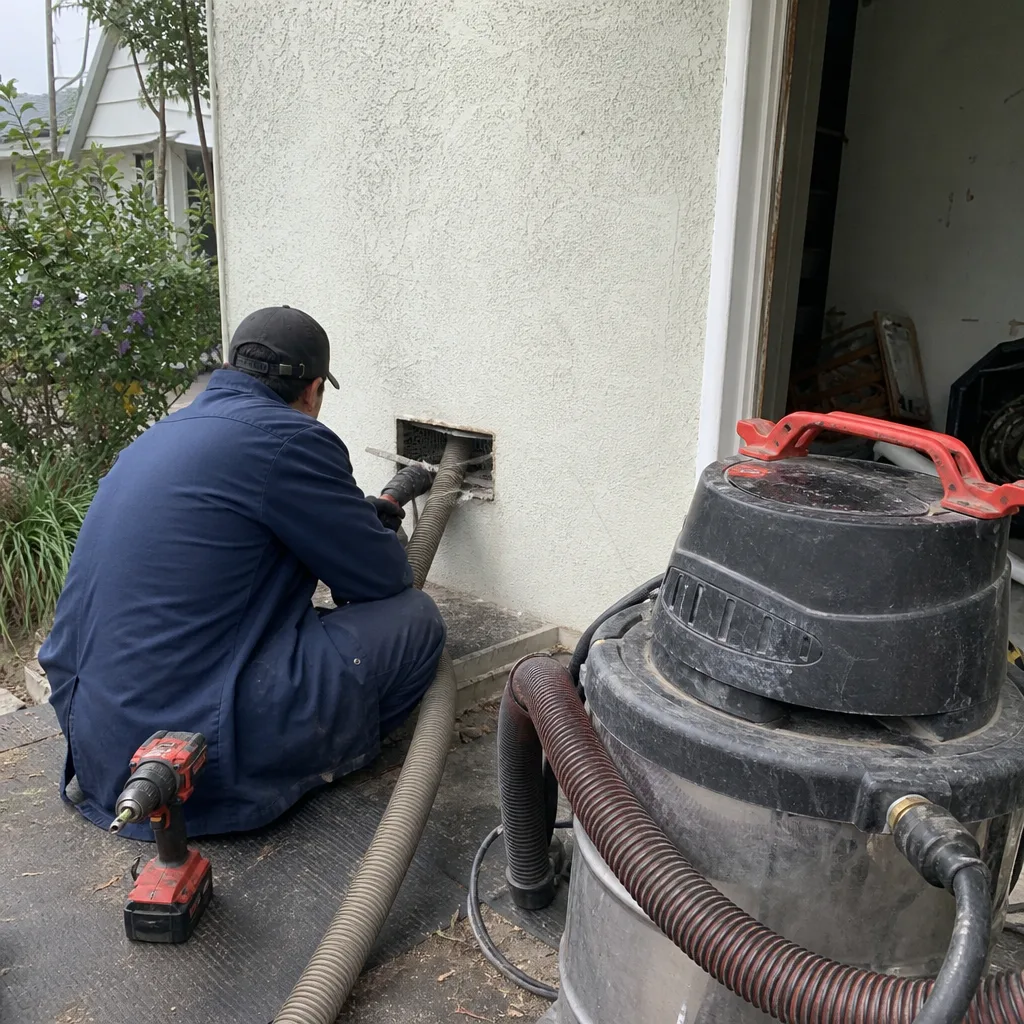
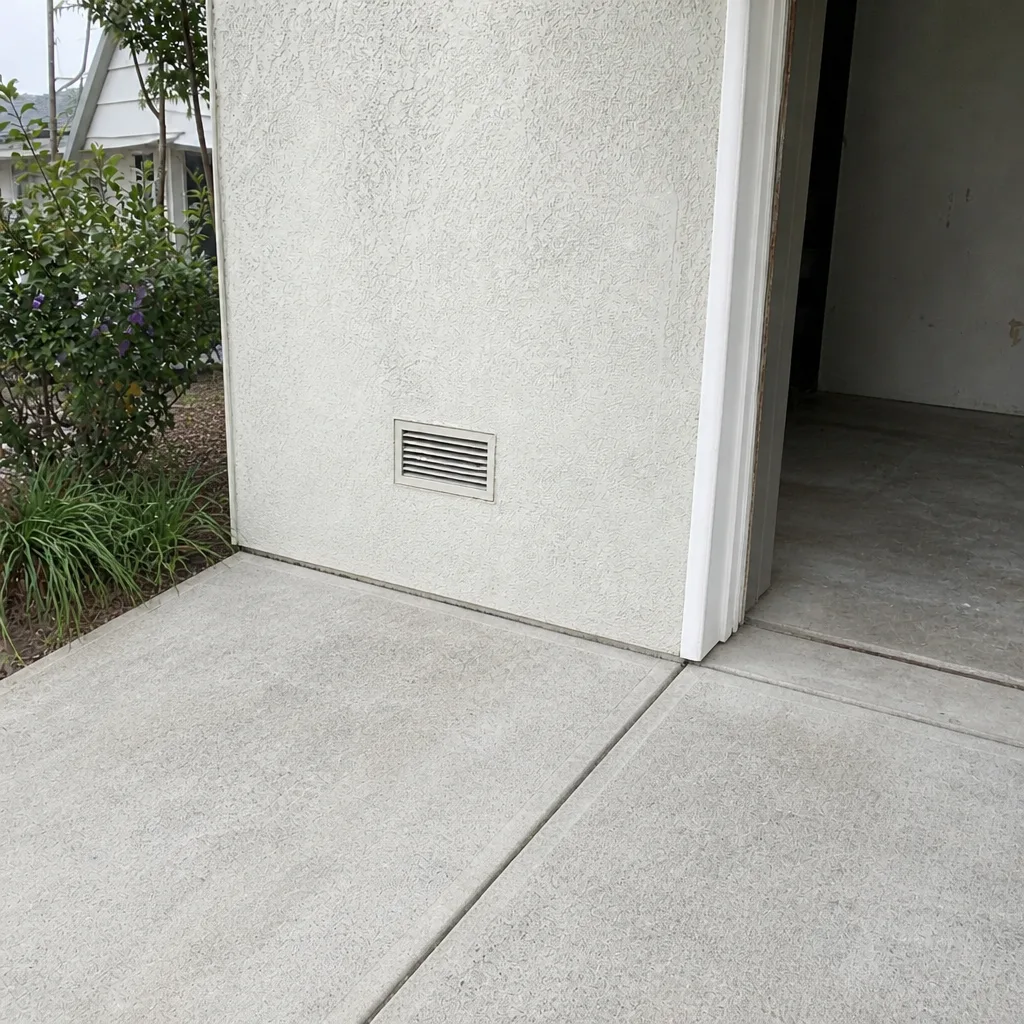
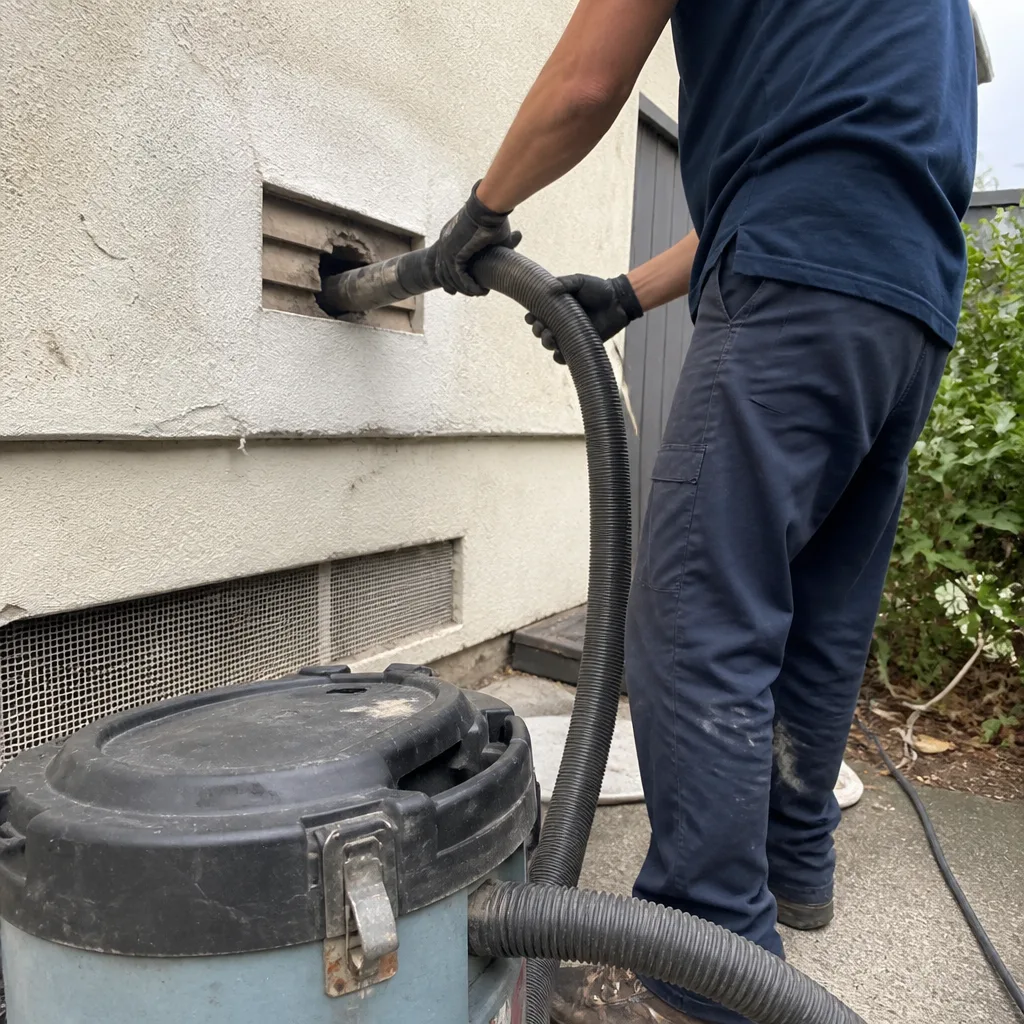
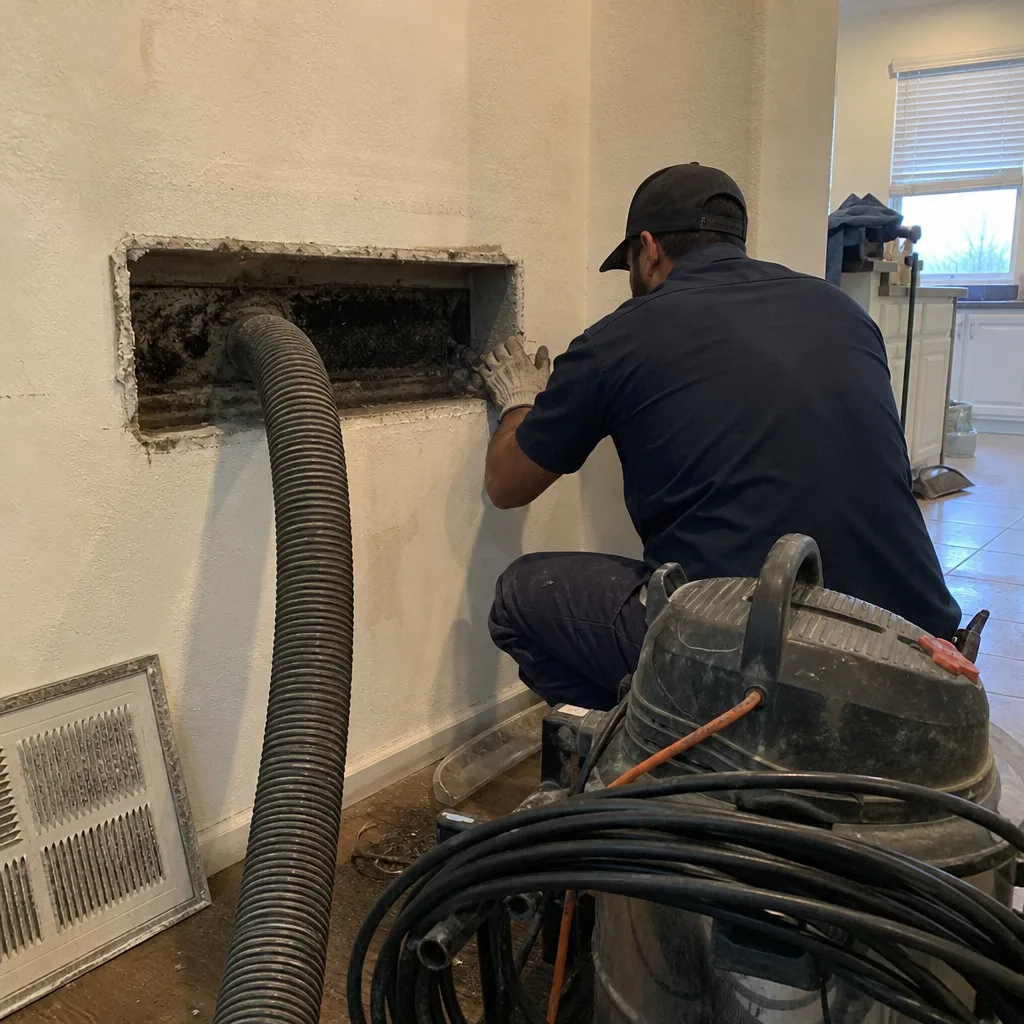
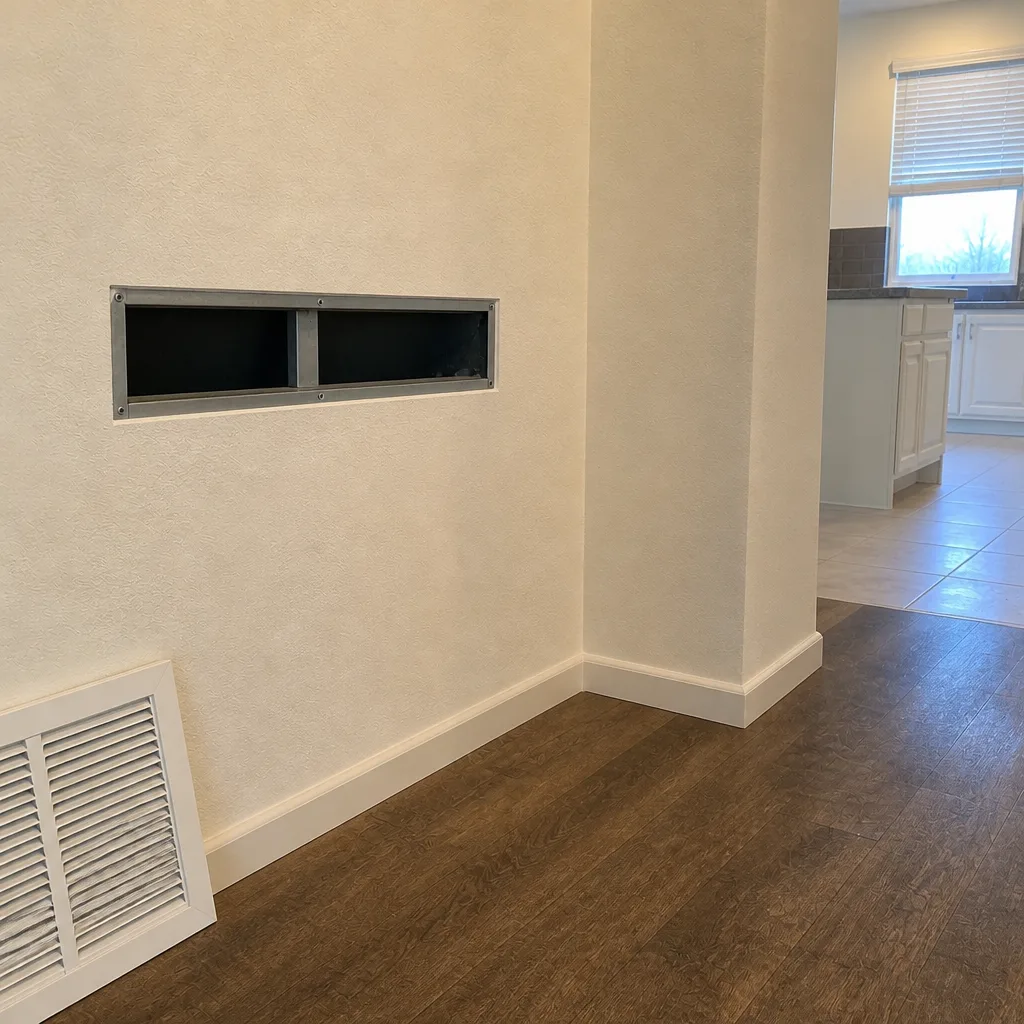
- Not asking for before-and-after photos of your own ducts. A technician who can’t show you the trunk line and plenum as found and as finished hasn’t given you proof. Photos are the receipt for the interior of the system.
See the difference
 Before
 After
 Before
 After
 Before
 After
When to Call a Professional
Call a specialist when the symptom you’re seeing doesn’t match what a cleaning should have fixed. That means musty odor that returns within weeks of a cleaning, weak airflow after a documented full-system clean, white dust on registers that isn’t tied to a recent remodel, or a smell at the air handler itself. Those are symptoms that point at the coil, the plenum, or the duct structure, not the register surface. A visual scope inspection and a pressure test settle the question quickly and keep you from spending twice on the same failure. If your dryer vent hasn’t been opened in years, that’s a separate and more urgent call: dedicated dryer vent cleaning is a fire-prevention service, not an upsell. Duct Cleaning Fairfield offers free estimates in Fairfield. Call (844) 834-3074. We answer 24/7. Fast dispatch from 7am to 7pm, Sunday through Friday.
Frequently Asked Questions
Because the source of the smell usually lives at the evaporator coil, the condensate pan, or the return plenum, and most cleanings address the branch ducts only. The wet coil continues to feed the biological growth, and the system redistributes it within weeks. Cleaning the coil and plenum first is what stops the return. Call (844) 834-3074 for an inspection and a free estimate for exact scope.
No. Airflow should improve after a proper cleaning, not weaken. When it weakens, the blower wheel and return plenum were almost certainly skipped. Older Fairfield homes with long trunk runs and wide return plenums are especially prone to this because per-vent jobs don’t cover the wide sections. A scope inspection and pressure test will tell you exactly what was missed.
It can be drywall dust from a recent remodel, insulation fiber from a failing duct liner, mineral scale from hard water on the coil and drain pan, or mineral dust from a humidifier running on hard water. The way to tell them apart is texture and location: drywall is soft and everywhere, scale is chalky and near the system, and fiberglass catches on cloth. If it isn’t obviously drywall dust, ask for a visual scope inspection before assuming cleaning will solve it. Call (844) 834-3074 for an exact quote on an inspection.
You know because you saw the evidence: a scope video of the trunk and plenum before and after, photos of your own ducts at the air handler, and a signed finding. If the only proof offered is a clean register grille, the work wasn’t proven. Ask for the documentation every time.
Because they’re quoting a partial job. A per-vent price typically covers register-to-branch cleaning with a portable vacuum, without scoping, without the air handler, without the coil, and without HEPA containment. A whole-system estimate is a different scope and a different number. The cheapest quote isn’t the cheapest outcome when the system recontaminates in a month.
It depends on the system, not the calendar. Homes with pets, recent remodeling, allergies, or a first-time inspection typically benefit sooner; a home with an intact, sealed system and regular filter changes may go much longer. In our experience, the right rhythm follows symptoms and inspections, not a fixed interval. A free estimate with a scope inspection tells you what this specific system actually needs. Call (844) 834-3074.
The Bottom Line
Duct problems that survive a cleaning almost always come down to three failures: coverage that stopped at the register, a coil or plenum that was never touched, or structural leaks that keep recontaminating the system. Read the symptom. If it’s wet, look at the coil. If it’s dust, look at the trunk and blower. If it returns after weeks, look at pressure and seals. And before you pay anyone a second time, use the checklist in this guide: scope, trunk and plenum, blower, coil, HEPA containment, photos, pressure test, and a per-system price in writing. Clean ducts are the foundation of healthy indoor air in Fairfield, and clean ducts that are sealed and documented are the foundation of a system you don’t have to keep troubleshooting.
Contact Duct Cleaning Fairfield
If you’re dealing with a duct problem in Fairfield that a cleaning was supposed to fix and didn’t, we’d like to see it. Our technicians have up to experience with Rotobrush rotary brush cleaning, Nikro high-CFM extraction, and Abatement Technologies HEPA containment. We repair what we find, not just clean over it, and we leave you with before-and-after photos of your own ducts. Call (844) 834-3074 for a free estimate. We answer 24/7. Fast dispatch from 7am to 7pm, Sunday through Friday.
Written by the team at Duct Cleaning Fairfield.